 bizdif.com
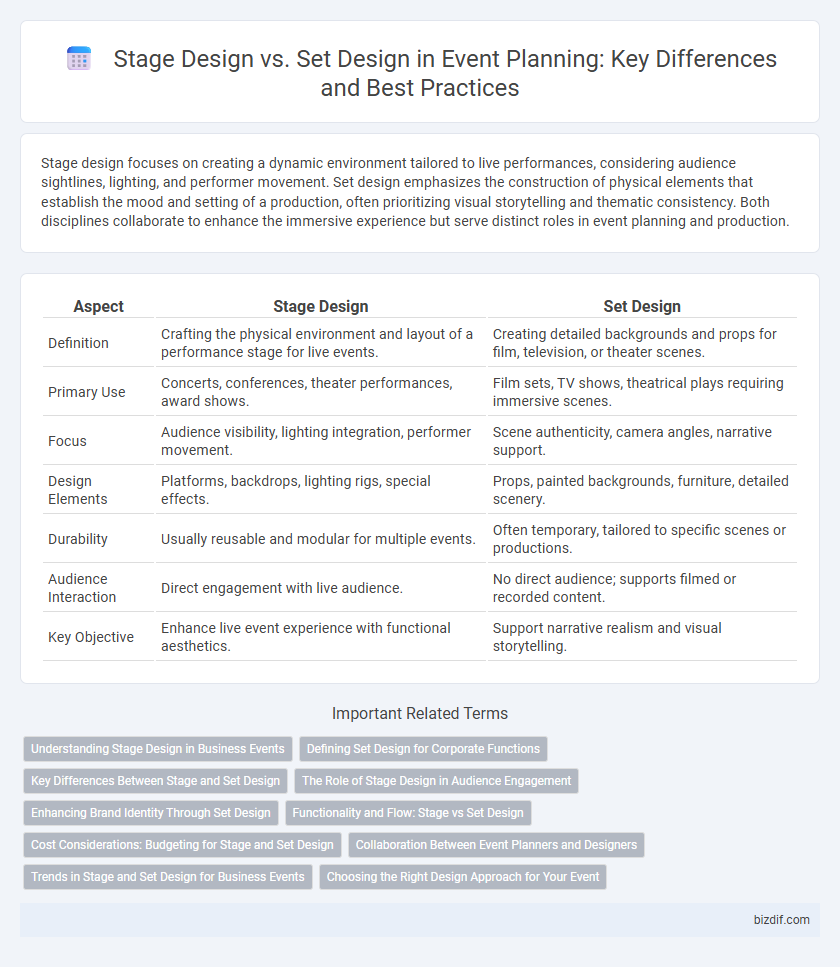
 Stage design focuses on creating a dynamic environment tailored to live performances, considering audience sightlines, lighting, and performer movement. Set design emphasizes the construction of physical elements that establish the mood and setting of a production, often prioritizing visual storytelling and thematic consistency. Both disciplines collaborate to enhance the immersive experience but serve distinct roles in event planning and production.
Table of Comparison
| Aspect | Stage Design | Set Design |
|---|---|---|
| Definition | Crafting the physical environment and layout of a performance stage for live events. | Creating detailed backgrounds and props for film, television, or theater scenes. |
| Primary Use | Concerts, conferences, theater performances, award shows. | Film sets, TV shows, theatrical plays requiring immersive scenes. |
| Focus | Audience visibility, lighting integration, performer movement. | Scene authenticity, camera angles, narrative support. |
| Design Elements | Platforms, backdrops, lighting rigs, special effects. | Props, painted backgrounds, furniture, detailed scenery. |
| Durability | Usually reusable and modular for multiple events. | Often temporary, tailored to specific scenes or productions. |
| Audience Interaction | Direct engagement with live audience. | No direct audience; supports filmed or recorded content. |
| Key Objective | Enhance live event experience with functional aesthetics. | Support narrative realism and visual storytelling. |
Understanding Stage Design in Business Events
Stage design in business events emphasizes creating a visually impactful environment that enhances speaker presentations and audience engagement. It involves strategic lighting, backdrop arrangements, and spatial organization to support brand messaging and event objectives. Unlike set design, which often tells a story or creates a scenic atmosphere, stage design prioritizes functionality and professionalism to facilitate seamless event execution.
Defining Set Design for Corporate Functions
Set design for corporate functions involves creating a cohesive and functional environment that aligns with the event's branding and objectives, incorporating elements such as backdrops, props, and furniture to enhance the atmosphere. It focuses on the overall spatial arrangement and visual storytelling to engage attendees and reinforce the corporate message. Unlike stage design, which prioritizes performance visibility and lighting, set design emphasizes the immersive experience and interaction within the event space.
Key Differences Between Stage and Set Design
Stage design focuses on creating the overall environment and spatial layout for live performances, emphasizing functionality and audience sightlines, while set design involves the detailed construction of specific scenery elements and props to establish the narrative context. Stage designers prioritize the integration of lighting, sound, and movement paths to support the performance flow, whereas set designers concentrate on visual storytelling through textures, colors, and thematic details. The key difference lies in stage design's broader architectural scope versus set design's intricate artistic composition within that space.
The Role of Stage Design in Audience Engagement
Stage design plays a crucial role in audience engagement by creating an immersive environment that enhances the storytelling and emotional impact of an event. Its strategic use of lighting, spatial arrangement, and visual elements directs audience focus and evokes specific moods, making the experience more memorable. Unlike set design, which primarily shapes the narrative setting, stage design dynamically interacts with performers and spectators to foster a deeper connection and active participation.
Enhancing Brand Identity Through Set Design
Set design plays a crucial role in enhancing brand identity by creating immersive environments that visually communicate a company's values and message. Strategic use of colors, logos, and thematic elements within the set design reinforces brand recognition and leaves a lasting impression on the audience. Unlike stage design, which focuses on functional space for performances, set design integrates branding elements seamlessly into the event experience, amplifying engagement and recall.
Functionality and Flow: Stage vs Set Design
Stage design prioritizes functionality by ensuring efficient performer movement and clear audience sightlines, enhancing the overall flow of a live event. Set design focuses on creating immersive environments through detailed props and backgrounds, supporting the narrative and visual storytelling. Both elements collaborate to balance practicality and aesthetics, optimizing event engagement and atmosphere.
Cost Considerations: Budgeting for Stage and Set Design
Stage design often involves structural elements like platforms, lighting rigs, and technical equipment, typically requiring a larger budget due to safety regulations and technical demands. Set design focuses primarily on aesthetic components such as backdrops, props, and scenery, usually allowing for more flexible and cost-effective materials. Proper budgeting must account for both the complexity of installation and the durability needed for the event's duration, balancing visual impact with practical expenditure.
Collaboration Between Event Planners and Designers
Effective collaboration between event planners and designers bridges the gap between stage design and set design, ensuring a cohesive visual experience tailored to the event's theme and audience engagement goals. Event planners provide logistical insights and audience flow considerations, while designers contribute expertise in aesthetics, materials, and spatial dynamics to create immersive environments. This synergy maximizes functionality and impact, elevating the overall event atmosphere through strategic alignment of creative vision and operational requirements.
Trends in Stage and Set Design for Business Events
Stage design in business events emphasizes dynamic lighting, modular components, and immersive visual technology to enhance audience engagement and brand storytelling. Set design trends favor flexible, multifunctional structures with sustainable materials that adapt to various event formats and promote corporate social responsibility. Integration of augmented reality and interactive elements is reshaping both stage and set designs, creating memorable experiences that align with modern business objectives.
Choosing the Right Design Approach for Your Event
Stage design emphasizes functionality and audience visibility, prioritizing layout, lighting, and performance flow to enhance speaker or performer engagement during events. Set design focuses on creating immersive, thematic environments that support storytelling and mood, using detailed props, backdrops, and artistic elements. Choosing the right design approach depends on event goals, audience experience, and the balance between practical stage needs and creative atmosphere.
Stage design vs Set design Infographic