 bizdif.com
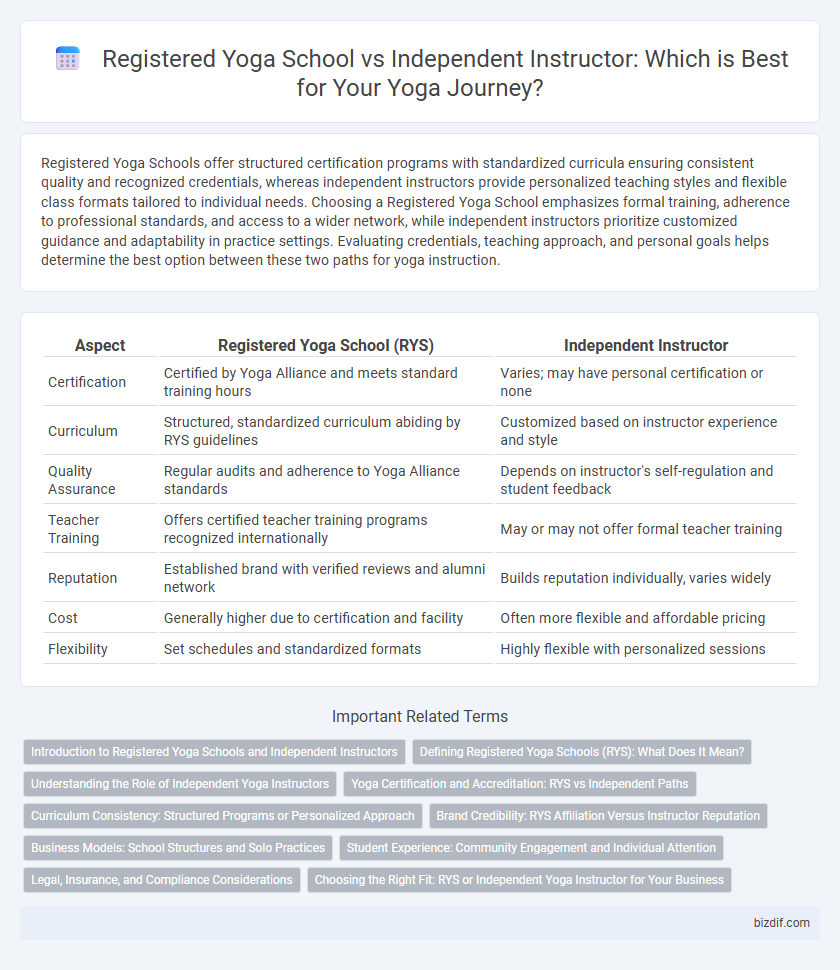
 Registered Yoga Schools offer structured certification programs with standardized curricula ensuring consistent quality and recognized credentials, whereas independent instructors provide personalized teaching styles and flexible class formats tailored to individual needs. Choosing a Registered Yoga School emphasizes formal training, adherence to professional standards, and access to a wider network, while independent instructors prioritize customized guidance and adaptability in practice settings. Evaluating credentials, teaching approach, and personal goals helps determine the best option between these two paths for yoga instruction.
Table of Comparison
| Aspect | Registered Yoga School (RYS) | Independent Instructor |
|---|---|---|
| Certification | Certified by Yoga Alliance and meets standard training hours | Varies; may have personal certification or none |
| Curriculum | Structured, standardized curriculum abiding by RYS guidelines | Customized based on instructor experience and style |
| Quality Assurance | Regular audits and adherence to Yoga Alliance standards | Depends on instructor's self-regulation and student feedback |
| Teacher Training | Offers certified teacher training programs recognized internationally | May or may not offer formal teacher training |
| Reputation | Established brand with verified reviews and alumni network | Builds reputation individually, varies widely |
| Cost | Generally higher due to certification and facility | Often more flexible and affordable pricing |
| Flexibility | Set schedules and standardized formats | Highly flexible with personalized sessions |
Introduction to Registered Yoga Schools and Independent Instructors
Registered Yoga Schools (RYS) adhere to Yoga Alliance standards, offering comprehensive teacher training programs that ensure consistent curriculum and certification recognized globally. Independent instructors design personalized yoga sessions tailored to individual needs but may lack formal certification from accredited institutions, affecting recognition and trust. Choosing a Registered Yoga School guarantees structured education and standardized teaching methods, while independent instructors provide flexibility and customized experiences.
Defining Registered Yoga Schools (RYS): What Does It Mean?
A Registered Yoga School (RYS) is an accredited institution recognized by the Yoga Alliance for meeting specific standards in yoga teacher training programs, ensuring consistency and quality in curriculum and instructor qualifications. RYS programs offer structured training that aligns with internationally accepted guidelines, making certifications from these schools widely respected and credible. This accreditation helps students identify reputable training options and assures adherence to established ethical and educational norms in yoga instruction.
Understanding the Role of Independent Yoga Instructors
Independent yoga instructors personalize teaching methods to suit individual student needs, fostering a more flexible and adaptive learning environment. Unlike registered yoga schools, they often design customized classes and focus on building direct relationships with students, enhancing motivation and engagement. Their role includes continual self-education and community involvement to maintain credibility and effectiveness in yoga instruction.
Yoga Certification and Accreditation: RYS vs Independent Paths
Registered Yoga Schools (RYS) offer certifications accredited by the Yoga Alliance, ensuring standardized curriculum, teacher training hours, and adherence to ethical guidelines recognized globally. Independent instructors may pursue alternative certification paths that lack Yoga Alliance accreditation, often providing more flexible, specialized training but with varying degrees of industry recognition. Opting for an RYS-certified program often enhances employment opportunities and credibility, while independent paths allow personalized teaching styles without standardized oversight.
Curriculum Consistency: Structured Programs or Personalized Approach
Registered Yoga Schools ensure curriculum consistency through structured programs aligned with recognized certification standards, providing students with a systematic and comprehensive learning experience. Independent instructors often offer personalized approaches tailored to individual client needs, which can vary widely in content and depth. This distinction impacts the predictability of training outcomes and adherence to established yoga philosophies and techniques.
Brand Credibility: RYS Affiliation Versus Instructor Reputation
Registered Yoga Schools (RYS) hold certification from Yoga Alliance, providing standardized curriculum and recognized training that enhance brand credibility and trustworthiness for students. Independent instructors build personal reputations through individual experience, specialized expertise, and client reviews, which can foster strong localized or niche trust but may lack formal validation. Students seeking verified teaching standards often prefer RYS-affiliated programs, while those valuing personalized instruction may prioritize independent instructors' reputations.
Business Models: School Structures and Solo Practices
Registered Yoga Schools operate within an established framework, offering structured curricula, certification programs, and group classes that attract a diverse student base. Independent instructors leverage flexible, personalized business models, providing one-on-one sessions, customized programs, and the ability to adapt schedules without institutional constraints. Both models emphasize different operational strategies, with Registered Yoga Schools focusing on scalability and brand recognition, while Independent Instructors prioritize individualized teaching and direct client relationships.
Student Experience: Community Engagement and Individual Attention
Registered Yoga Schools offer structured programs with extensive community engagement, fostering a sense of belonging among students through group classes and workshops. Independent instructors often provide personalized attention, tailoring sessions to individual needs for deeper alignment and progress. Students benefit from the blend of Registered Yoga Schools' collaborative environment and the focused guidance of independent instructors.
Legal, Insurance, and Compliance Considerations
Registered Yoga Schools (RYS) adhere to Yoga Alliance standards, ensuring compliance with legal and insurance requirements, offering instructors public liability insurance and credential recognition. Independent instructors must independently verify local regulations, often requiring separate professional liability insurance and adherence to health and safety laws. Compliance with data protection and client consent protocols remains essential for both to avoid legal risks and secure client trust.
Choosing the Right Fit: RYS or Independent Yoga Instructor for Your Business
Selecting between a Registered Yoga School (RYS) and an independent yoga instructor depends on the level of curriculum standardization and professional credibility required for your business. RYS offers accredited training programs certified by Yoga Alliance, ensuring adherence to established teaching methodologies and recognized certification, which appeals to clients seeking consistency and quality assurance. Independent instructors provide personalized, flexible approaches and may bring unique styles or specialties, making them ideal for businesses aiming for niche markets or customized client experiences.
Registered Yoga School vs Independent Instructor Infographic