 bizdif.com
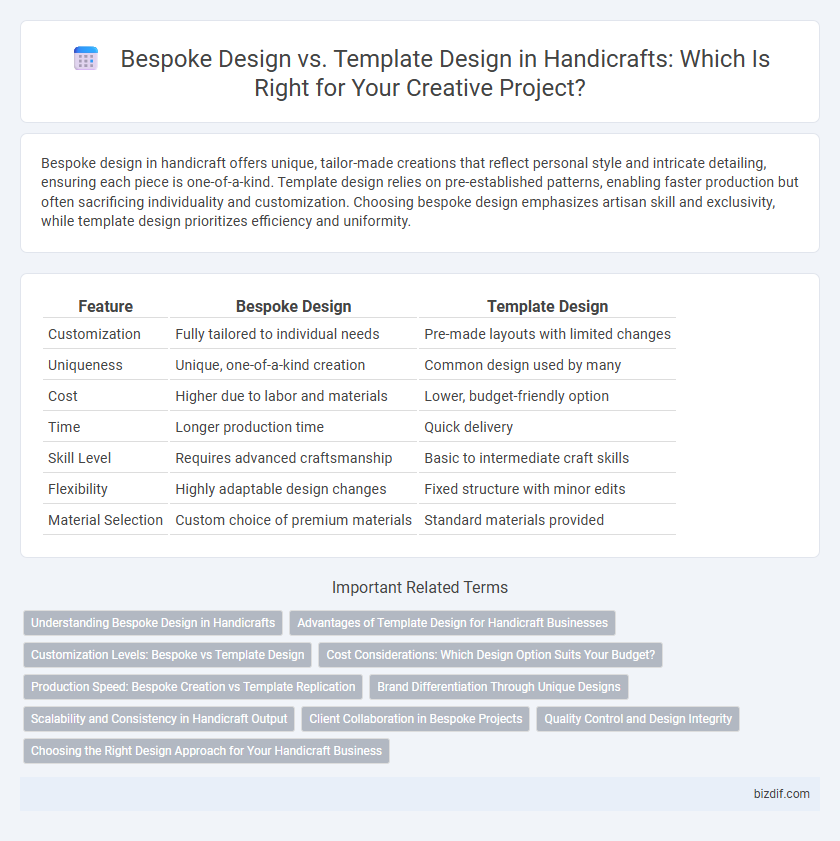
 Bespoke design in handicraft offers unique, tailor-made creations that reflect personal style and intricate detailing, ensuring each piece is one-of-a-kind. Template design relies on pre-established patterns, enabling faster production but often sacrificing individuality and customization. Choosing bespoke design emphasizes artisan skill and exclusivity, while template design prioritizes efficiency and uniformity.
Table of Comparison
| Feature | Bespoke Design | Template Design |
|---|---|---|
| Customization | Fully tailored to individual needs | Pre-made layouts with limited changes |
| Uniqueness | Unique, one-of-a-kind creation | Common design used by many |
| Cost | Higher due to labor and materials | Lower, budget-friendly option |
| Time | Longer production time | Quick delivery |
| Skill Level | Requires advanced craftsmanship | Basic to intermediate craft skills |
| Flexibility | Highly adaptable design changes | Fixed structure with minor edits |
| Material Selection | Custom choice of premium materials | Standard materials provided |
Understanding Bespoke Design in Handicrafts
Bespoke design in handicrafts emphasizes creating unique, tailor-made pieces that reflect the artisan's creativity and the client's specific preferences, ensuring exclusivity and personalized expression. Unlike template design, bespoke craftsmanship involves meticulous handwork with attention to detail, materials, and cultural significance, resulting in products that hold emotional and artistic value. This approach supports sustainable practices by valuing craftsmanship and individuality over mass production.
Advantages of Template Design for Handicraft Businesses
Template design offers handicraft businesses a streamlined production process by providing consistent layouts that reduce design time and lower costs. This approach enables quicker turnaround, making it easier to meet high demand while maintaining quality across products. Utilizing templates enhances scalability and allows artisans to focus on craftsmanship rather than repetitive design decisions.
Customization Levels: Bespoke vs Template Design
Bespoke design offers unparalleled customization by tailoring every element to the client's specifications, ensuring unique and highly personalized handicraft products. Template design provides limited customization, relying on pre-made structures that allow minor adjustments but restrict originality. Higher customization levels in bespoke design result in exclusive, one-of-a-kind pieces, while template designs facilitate faster production with standardized features.
Cost Considerations: Which Design Option Suits Your Budget?
Bespoke design in handicrafts typically involves higher costs due to customized materials and skilled artisan labor, offering unique and personalized products. Template design reduces expenses by utilizing pre-made patterns and standardized production processes, making it suitable for budget-conscious buyers. Assessing your budget helps determine whether investing in exclusive craftsmanship or opting for cost-effective mass production aligns best with your financial plan.
Production Speed: Bespoke Creation vs Template Replication
Bespoke design in handicrafts involves meticulous customization and artisanal techniques, resulting in longer production times due to personalized craftsmanship. Template design allows for rapid replication by using pre-established patterns that streamline the manufacturing process and reduce turnaround time. Production speed in template replication outpaces bespoke creation by prioritizing efficiency and uniformity in output.
Brand Differentiation Through Unique Designs
Bespoke design in handicraft enables brands to create unique, tailored products that reflect their identity and stand out in competitive markets. Template design often limits creativity and results in generic items lacking distinctiveness, reducing opportunities for strong brand differentiation. Investing in custom designs enhances customer perception, loyalty, and positions the brand as an innovator in the artisanal industry.
Scalability and Consistency in Handicraft Output
Bespoke design in handicrafts offers unmatched uniqueness and customization but often limits scalability due to the intensive manual labor involved. Template design enables consistent replication across multiple pieces, ensuring uniformity and enhancing production efficiency for larger batches. Balancing bespoke creativity with template scalability is crucial for artisans aiming to maintain quality while meeting growing demand.
Client Collaboration in Bespoke Projects
Client collaboration in bespoke handicraft projects fosters a personalized design process, allowing artisans to tailor products according to specific preferences and functional needs. This dynamic interaction enhances creativity and ensures that each piece reflects the client's unique vision and lifestyle, unlike template designs that follow fixed patterns. Bespoke design nurtures a co-creative partnership, resulting in one-of-a-kind handcrafted items with higher emotional and artisanal value.
Quality Control and Design Integrity
Bespoke design in handicraft ensures unparalleled quality control by allowing artisans to oversee every detail, preserving the design's originality and craftsmanship integrity. Template design often compromises on these aspects due to standardized production processes that limit customization and reduce individual attention. Quality control in bespoke work maintains the authenticity and uniqueness of each piece, reflecting true artisanal skill.
Choosing the Right Design Approach for Your Handicraft Business
Bespoke design in handicrafts offers personalized, unique creations tailored to individual customer preferences, enhancing brand exclusivity and customer loyalty. Template design provides efficient production and cost-effectiveness by replicating established patterns, ideal for businesses targeting mass markets or consistent product lines. Evaluating your target audience, production capacity, and desired market positioning ensures choosing the right design approach maximizes both creative expression and commercial success.
Bespoke design vs Template design Infographic