 bizdif.com
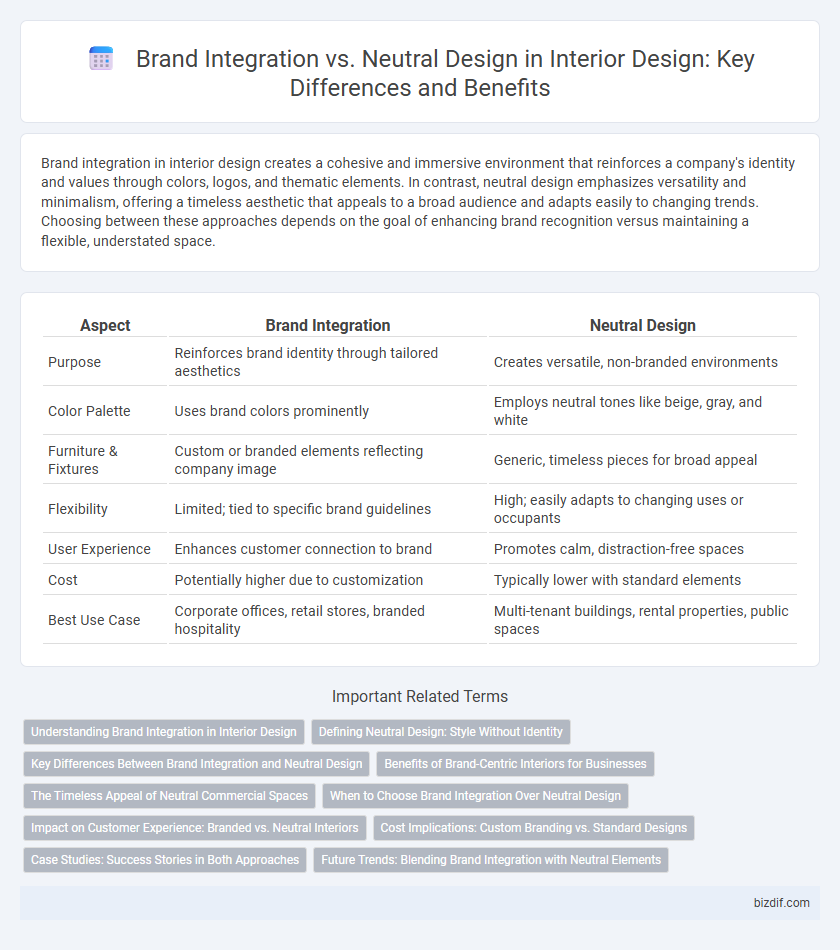
 Brand integration in interior design creates a cohesive and immersive environment that reinforces a company's identity and values through colors, logos, and thematic elements. In contrast, neutral design emphasizes versatility and minimalism, offering a timeless aesthetic that appeals to a broad audience and adapts easily to changing trends. Choosing between these approaches depends on the goal of enhancing brand recognition versus maintaining a flexible, understated space.
Table of Comparison
| Aspect | Brand Integration | Neutral Design |
|---|---|---|
| Purpose | Reinforces brand identity through tailored aesthetics | Creates versatile, non-branded environments |
| Color Palette | Uses brand colors prominently | Employs neutral tones like beige, gray, and white |
| Furniture & Fixtures | Custom or branded elements reflecting company image | Generic, timeless pieces for broad appeal |
| Flexibility | Limited; tied to specific brand guidelines | High; easily adapts to changing uses or occupants |
| User Experience | Enhances customer connection to brand | Promotes calm, distraction-free spaces |
| Cost | Potentially higher due to customization | Typically lower with standard elements |
| Best Use Case | Corporate offices, retail stores, branded hospitality | Multi-tenant buildings, rental properties, public spaces |
Understanding Brand Integration in Interior Design
Brand integration in interior design involves seamlessly incorporating a company's logo, colors, and core identity into the physical space to create a cohesive brand experience. This approach enhances customer recognition and loyalty by aligning the environment with the brand's values and messaging. Unlike neutral design, which emphasizes flexibility and broad appeal, brand integration delivers a personalized, immersive environment that strengthens brand presence and emotional connection.
Defining Neutral Design: Style Without Identity
Neutral design emphasizes simplicity through muted color palettes, clean lines, and minimal decorative elements, allowing spaces to remain versatile and universally appealing. Unlike brand integration, which incorporates specific logos, colors, and thematic elements to reflect a company's identity, neutral design avoids distinct stylistic markers to maintain flexibility across various uses. This style supports multifunctional environments by providing a blank canvas that can easily adapt to changing purposes or occupants.
Key Differences Between Brand Integration and Neutral Design
Brand integration in interior design emphasizes incorporating a company's logo, colors, and visual identity into the space to reinforce brand recognition and create a cohesive customer experience. Neutral design prioritizes timeless, minimalist aesthetics with muted colors and simple forms, offering versatility and broad appeal without strong brand signals. Key differences lie in how brand integration targets emotional connection through distinct visual cues, while neutral design promotes flexibility and a calming atmosphere adaptable to various users and purposes.
Benefits of Brand-Centric Interiors for Businesses
Brand-centric interiors enhance customer loyalty by creating immersive experiences that reflect a company's identity and values, increasing brand recognition and emotional connection. Custom-designed spaces tailored to brand aesthetics improve employee engagement and productivity by fostering a sense of belonging and pride in the workplace. Integrating brand elements into interior design also differentiates businesses from competitors, providing a memorable environment that supports marketing and sales objectives.
The Timeless Appeal of Neutral Commercial Spaces
Neutral commercial spaces offer a timeless appeal by providing versatile backdrops that adapt seamlessly to evolving brand identities and design trends. Their understated palettes enhance natural light and architectural features, creating a balanced atmosphere conducive to productivity and comfort. Integrating subtle brand elements within neutral designs ensures lasting relevance while maintaining a professional, inviting environment.
When to Choose Brand Integration Over Neutral Design
Brand integration in interior design is ideal for businesses seeking to strengthen brand identity and create immersive customer experiences by incorporating logos, colors, and elements that reflect the company's ethos. Choosing brand integration over neutral design makes sense when the space serves a commercial purpose, such as retail stores, offices, or hospitality venues, where reinforcing brand recognition can drive engagement and loyalty. Neutral design suits environments requiring flexibility and broad appeal, but brand integration delivers a distinctive atmosphere that directly communicates core values and brand personality.
Impact on Customer Experience: Branded vs. Neutral Interiors
Branded interiors create a cohesive and memorable customer experience by reinforcing brand identity through colors, logos, and thematic elements, enhancing brand recall and emotional connection. Neutral design offers a versatile and calming environment that appeals to a broad audience, reducing sensory overload and allowing customers to focus on products or services without distraction. Both approaches influence customer perception significantly; branded spaces drive brand loyalty and recognition, while neutral designs prioritize comfort and adaptability.
Cost Implications: Custom Branding vs. Standard Designs
Custom branding in interior design often results in higher costs due to specialized materials, tailored furniture, and unique decor elements that reflect the brand identity. Standard designs minimize expenses by utilizing off-the-shelf products and versatile layouts that suit multiple settings without extensive customization. Budget management balances the long-term value of brand consistency against the initial savings of neutral, adaptable design choices.
Case Studies: Success Stories in Both Approaches
Case studies reveal that brand integration in interior design enhances customer experience by incorporating logos, colors, and thematic elements, resulting in stronger brand recognition and emotional connection, as demonstrated by Starbucks' consistent cafe aesthetics. In contrast, neutral design offers flexibility and timelessness, catering to diverse user preferences while ensuring longevity, exemplified by Airbnb's minimalist interiors that adapt easily to different locations and clientele. Both approaches achieve success by aligning design strategies closely with business goals and target audience expectations.
Future Trends: Blending Brand Integration with Neutral Elements
Future interior design trends emphasize blending brand integration with neutral elements to create versatile and cohesive spaces that reflect a brand's identity without overwhelming the environment. Incorporating subtle brand colors, logos, and textures within predominantly neutral palettes allows for adaptive designs that can evolve with changing market demands. This approach balances personalization and timelessness, promoting sustainability and long-term usability in commercial and residential interiors.
Brand integration vs Neutral design Infographic