 bizdif.com
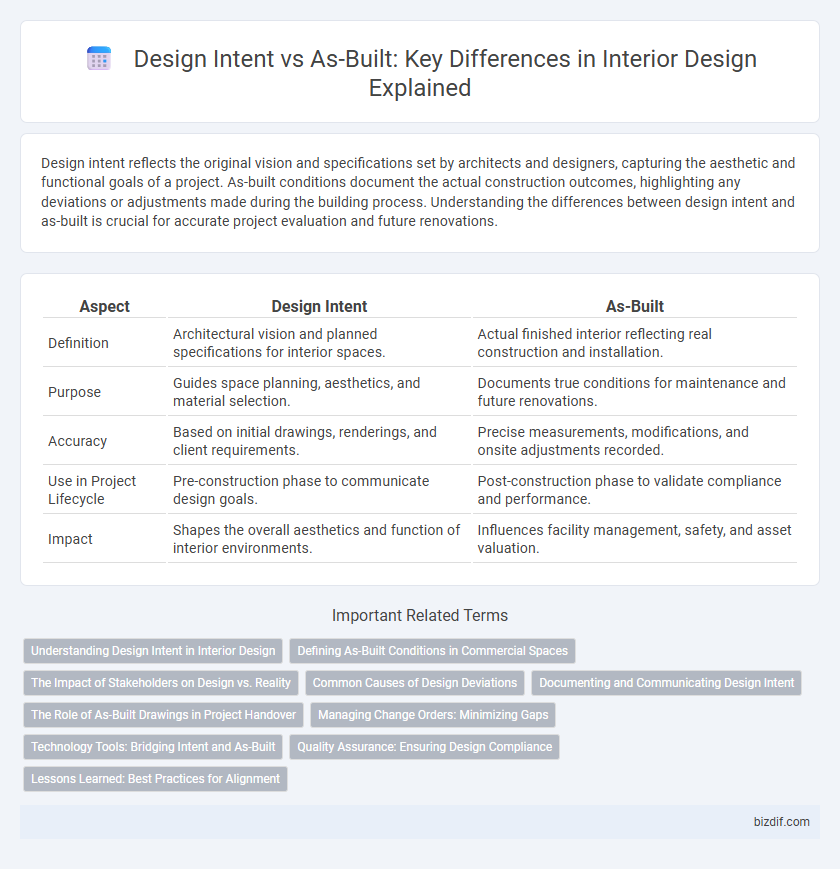
 Design intent reflects the original vision and specifications set by architects and designers, capturing the aesthetic and functional goals of a project. As-built conditions document the actual construction outcomes, highlighting any deviations or adjustments made during the building process. Understanding the differences between design intent and as-built is crucial for accurate project evaluation and future renovations.
Table of Comparison
| Aspect | Design Intent | As-Built |
|---|---|---|
| Definition | Architectural vision and planned specifications for interior spaces. | Actual finished interior reflecting real construction and installation. |
| Purpose | Guides space planning, aesthetics, and material selection. | Documents true conditions for maintenance and future renovations. |
| Accuracy | Based on initial drawings, renderings, and client requirements. | Precise measurements, modifications, and onsite adjustments recorded. |
| Use in Project Lifecycle | Pre-construction phase to communicate design goals. | Post-construction phase to validate compliance and performance. |
| Impact | Shapes the overall aesthetics and function of interior environments. | Influences facility management, safety, and asset valuation. |
Understanding Design Intent in Interior Design
Understanding design intent in interior design involves interpreting the original vision and functional goals outlined by architects and designers to ensure that spatial planning, material selection, and aesthetics align with the project's purpose. It requires careful analysis of design drawings, mood boards, and project specifications to maintain consistency between conceptual ideas and practical implementation. Grasping design intent facilitates informed decision-making during construction, ultimately preserving the intended user experience and spatial harmony.
Defining As-Built Conditions in Commercial Spaces
Defining As-Built conditions in commercial spaces involves accurately documenting the final construction status, reflecting all modifications from the original design intent. These conditions provide a precise record of installed materials, dimensions, and system placements, crucial for future renovations or maintenance. Understanding the distinctions between design intent and as-built ensures alignment between architectural plans and the completed environment.
The Impact of Stakeholders on Design vs. Reality
Stakeholders such as clients, contractors, and consultants influence the gap between design intent and as-built outcomes in interior design projects. Variations often arise due to budget constraints, material availability, and on-site adaptations driven by real-time decision-making. Effective communication and collaboration among stakeholders are essential to align the final construction with the original design vision.
Common Causes of Design Deviations
Design deviations often arise from unforeseen site conditions, such as structural limitations or existing mechanical systems that conflict with the original design intent. Material availability and substitutions can also lead to modifications that deviate from planned specifications. Furthermore, communication gaps between designers, contractors, and clients frequently result in discrepancies between the design intent and the as-built environment.
Documenting and Communicating Design Intent
Design Intent represents the architect's or designer's original vision, detailing materials, finishes, spatial layouts, and functional goals to guide construction and stakeholder understanding. As-Built documentation captures the final, constructed state of the project, reflecting any on-site modifications or deviations from the initial design. Accurate and thorough documenting and communicating Design Intent ensures alignment between design goals and construction outcomes, minimizing discrepancies and facilitating effective project collaboration.
The Role of As-Built Drawings in Project Handover
As-built drawings capture the precise final dimensions and conditions of a space, reflecting any changes made during construction compared to the original design intent. These documents serve as a vital reference for facility management, renovations, and ensuring compliance with safety standards during project handover. Accurate as-built drawings facilitate seamless communication between designers, contractors, and clients, preventing costly errors and supporting long-term maintenance.
Managing Change Orders: Minimizing Gaps
Managing change orders effectively bridges the gap between design intent and as-built conditions, ensuring project alignment and minimizing costly discrepancies. Clear documentation and real-time tracking of modifications enable interior design teams to adapt swiftly while preserving aesthetic and functional goals. Streamlined communication between designers, contractors, and clients reduces errors, accelerates decision-making, and ensures the final space reflects the original vision.
Technology Tools: Bridging Intent and As-Built
Technology tools such as Building Information Modeling (BIM) and 3D laser scanning facilitate accurate alignment between design intent and as-built conditions in interior design projects. These tools enable real-time verification and updates, minimizing discrepancies and ensuring precise implementation of design concepts. Enhanced collaboration platforms also support seamless communication among architects, contractors, and designers, streamlining project workflows and reducing costly errors.
Quality Assurance: Ensuring Design Compliance
Design Intent documents provide detailed specifications and aesthetic goals to guide construction, while As-Built drawings capture the actual completed conditions on-site. Quality Assurance processes compare As-Built results against Design Intent to verify compliance, identify deviations, and ensure adherence to design standards. Effective coordination, precise documentation, and regular inspections are critical to maintaining design integrity and achieving high-quality interior environments.
Lessons Learned: Best Practices for Alignment
Design intent documents serve as the foundational blueprint, outlining the envisioned spatial layout, materials, and aesthetic goals to guide construction teams in achieving the desired outcome. As-built drawings capture the actual dimensions, modifications, and installed elements post-construction, often revealing deviations that highlight the importance of frequent communication and on-site verification. Implementing rigorous review protocols and continuous collaboration between designers, contractors, and clients ensures alignment between design intent and as-built conditions, minimizing costly changes and enhancing project quality.
Design Intent vs As-Built Infographic