 bizdif.com
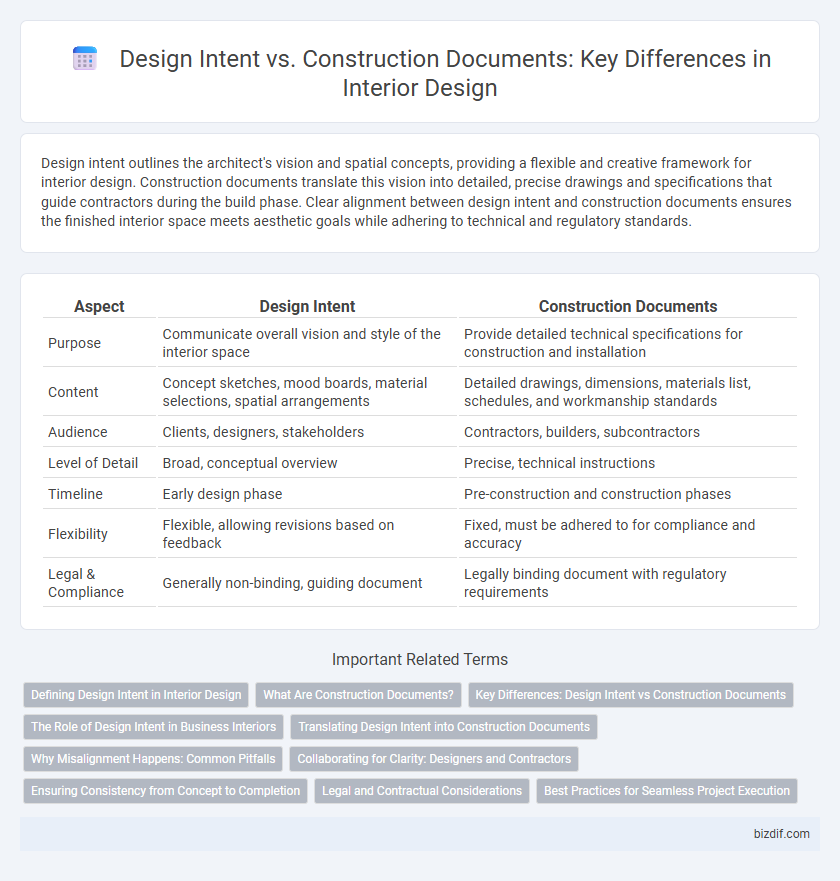
 Design intent outlines the architect's vision and spatial concepts, providing a flexible and creative framework for interior design. Construction documents translate this vision into detailed, precise drawings and specifications that guide contractors during the build phase. Clear alignment between design intent and construction documents ensures the finished interior space meets aesthetic goals while adhering to technical and regulatory standards.
Table of Comparison
| Aspect | Design Intent | Construction Documents |
|---|---|---|
| Purpose | Communicate overall vision and style of the interior space | Provide detailed technical specifications for construction and installation |
| Content | Concept sketches, mood boards, material selections, spatial arrangements | Detailed drawings, dimensions, materials list, schedules, and workmanship standards |
| Audience | Clients, designers, stakeholders | Contractors, builders, subcontractors |
| Level of Detail | Broad, conceptual overview | Precise, technical instructions |
| Timeline | Early design phase | Pre-construction and construction phases |
| Flexibility | Flexible, allowing revisions based on feedback | Fixed, must be adhered to for compliance and accuracy |
| Legal & Compliance | Generally non-binding, guiding document | Legally binding document with regulatory requirements |
Defining Design Intent in Interior Design
Design intent in interior design outlines the conceptual vision, spatial relationships, materials, and finishes envisioned by the designer to achieve aesthetic and functional goals. It serves as a guiding framework that communicates the desired atmosphere, user experience, and design principles before detailed specifications are developed. Clear articulation of design intent ensures alignment between stakeholders and informs the precise creation of construction documents.
What Are Construction Documents?
Construction documents are detailed drawings, specifications, and schedules used to guide the actual building process in interior design projects. These documents translate the design intent into precise instructions that contractors and builders follow to ensure accurate material selection, dimensions, and finishes. They serve as a legal record and a communication tool that bridges the gap between creative concepts and physical execution.
Key Differences: Design Intent vs Construction Documents
Design Intent outlines the overall vision, aesthetic goals, and spatial functionality proposed by the interior designer, emphasizing conceptual elements and user experience. Construction Documents provide detailed technical specifications, including precise measurements, materials, and installation instructions essential for contractors to execute the design accurately. The key difference lies in Design Intent being a broad, visionary guide, while Construction Documents serve as an exact blueprint for building and implementation.
The Role of Design Intent in Business Interiors
Design intent serves as the foundational vision guiding the aesthetic and functional elements of business interiors, ensuring alignment with brand identity and user experience goals. It informs key decisions on materials, spatial layout, lighting, and ergonomics before detailed specifications are formalized in construction documents. Clear articulation of design intent helps streamline project timelines and reduce costly revisions during the construction phase.
Translating Design Intent into Construction Documents
Translating design intent into construction documents requires precise interpretation of aesthetic vision into detailed technical drawings, specifications, and schedules that guide contractors during execution. Effective construction documents ensure accurate material selection, spatial dimensions, and functional elements align with the intended design concept, minimizing errors and costly revisions. Clear communication across architectural, engineering, and interior design teams bridges conceptual creativity with practical implementation, resulting in seamless project realization.
Why Misalignment Happens: Common Pitfalls
Misalignment between design intent and construction documents often occurs due to incomplete communication and inadequate detail in drawings, leading to confusion on-site. Inconsistent updates or revisions during the design phase can result in outdated documents that do not reflect the final vision. Failure to integrate multidisciplinary inputs and overlooking code requirements also contribute significantly to discrepancies affecting project outcomes.
Collaborating for Clarity: Designers and Contractors
Design intent outlines the conceptual vision and functional goals set by the interior designer, serving as a foundational guide for project execution. Construction documents translate this vision into precise technical drawings and specifications critical for contractors to follow accurately. Effective collaboration between designers and contractors ensures alignment, reduces errors, and streamlines the construction process by clarifying expectations and resolving potential discrepancies early.
Ensuring Consistency from Concept to Completion
Design intent captures the visionary goals and spatial functionality envisioned by interior designers, serving as the initial blueprint for the project's aesthetic and usability. Construction documents translate this vision into precise technical drawings and specifications, ensuring contractors execute the design accurately. Maintaining strict alignment between design intent and construction documents is crucial to uphold consistency and avoid costly errors during project completion.
Legal and Contractual Considerations
Design intent documents outline the designer's vision and aesthetic goals, serving as a conceptual guide without binding legal authority. Construction documents provide detailed specifications, drawings, and schedules that form the contractual basis for bids, permits, and construction, ensuring compliance with building codes and regulations. Clear differentiation between these documents is crucial to avoid legal disputes, as construction documents are legally enforceable while design intent documents primarily influence project interpretation.
Best Practices for Seamless Project Execution
Design intent defines the vision and aesthetic goals of an interior project, while construction documents provide detailed specifications and technical drawings to guide execution. Best practices for seamless project execution include thorough collaboration between designers, contractors, and clients to ensure alignment, regular updates and revisions to construction documents reflecting design changes, and clear communication of material selections and installation methods. Integrating 3D models and comprehensive documentation minimizes discrepancies and streamlines workflows, resulting in efficient project delivery and high-quality interior finishes.
Design intent vs Construction documents Infographic