 bizdif.com
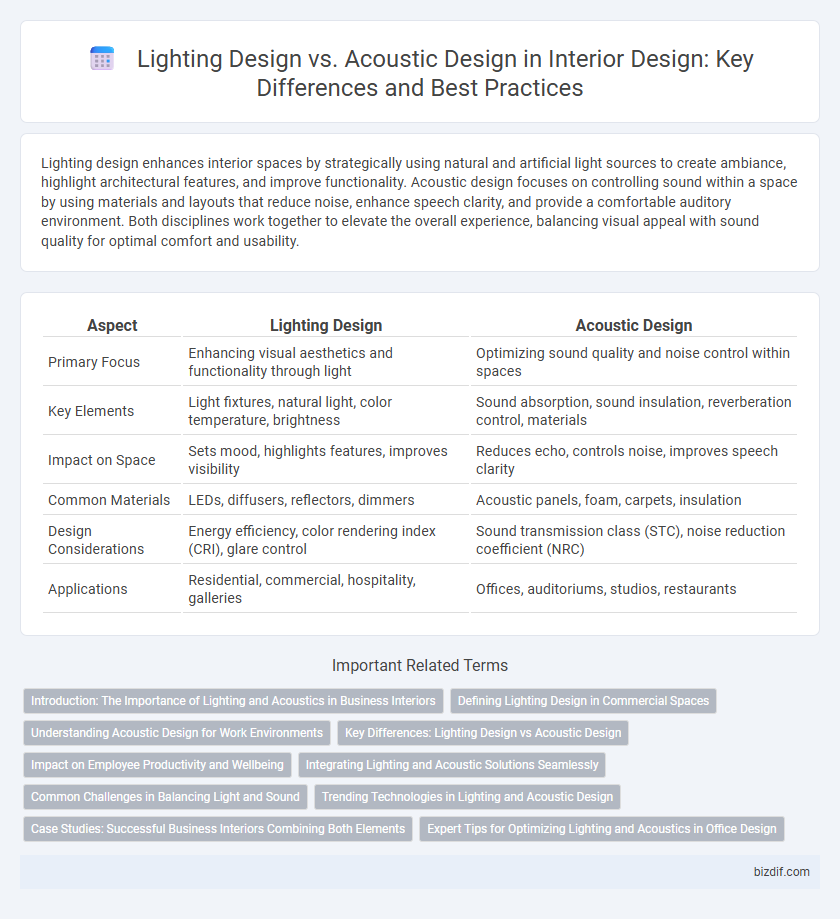
 Lighting design enhances interior spaces by strategically using natural and artificial light sources to create ambiance, highlight architectural features, and improve functionality. Acoustic design focuses on controlling sound within a space by using materials and layouts that reduce noise, enhance speech clarity, and provide a comfortable auditory environment. Both disciplines work together to elevate the overall experience, balancing visual appeal with sound quality for optimal comfort and usability.
Table of Comparison
| Aspect | Lighting Design | Acoustic Design |
|---|---|---|
| Primary Focus | Enhancing visual aesthetics and functionality through light | Optimizing sound quality and noise control within spaces |
| Key Elements | Light fixtures, natural light, color temperature, brightness | Sound absorption, sound insulation, reverberation control, materials |
| Impact on Space | Sets mood, highlights features, improves visibility | Reduces echo, controls noise, improves speech clarity |
| Common Materials | LEDs, diffusers, reflectors, dimmers | Acoustic panels, foam, carpets, insulation |
| Design Considerations | Energy efficiency, color rendering index (CRI), glare control | Sound transmission class (STC), noise reduction coefficient (NRC) |
| Applications | Residential, commercial, hospitality, galleries | Offices, auditoriums, studios, restaurants |
Introduction: The Importance of Lighting and Acoustics in Business Interiors
Effective lighting design enhances visual comfort, productivity, and ambiance in business interiors by strategically using natural and artificial light to reduce glare and shadows. Acoustic design controls sound quality, minimizing noise pollution and reverberation to create an environment conducive to communication and concentration. Integrating both lighting and acoustics optimizes employee well-being, customer experience, and overall operational efficiency.
Defining Lighting Design in Commercial Spaces
Lighting design in commercial spaces involves strategically placing and selecting fixtures to enhance visibility, create ambiance, and improve functionality for employees and customers. It prioritizes energy efficiency, compliance with building codes, and integration with architectural elements to optimize productivity and visual comfort. Effective lighting design also considers natural light utilization and the impact on mood and brand perception.
Understanding Acoustic Design for Work Environments
Acoustic design in work environments focuses on controlling sound levels, reducing noise distractions, and enhancing speech clarity to improve productivity and comfort. It involves the strategic use of materials, such as sound-absorbing panels and acoustic baffles, to manage reverberation and prevent sound transmission between spaces. Effective acoustic solutions create a balanced auditory atmosphere that supports communication and concentration, complementing the lighting design aimed at visual comfort.
Key Differences: Lighting Design vs Acoustic Design
Lighting design focuses on optimizing the distribution, intensity, and color temperature of light within a space to enhance visibility, mood, and aesthetic appeal. Acoustic design addresses sound control by managing reverberation, noise levels, and clarity through materials, spatial layout, and soundproofing techniques. Key differences include the sensory focus--visual impact for lighting design versus auditory experience for acoustic design--and the technical strategies employed to balance illumination with sound quality in interior environments.
Impact on Employee Productivity and Wellbeing
Lighting design enhances employee productivity by reducing eye strain and improving mood through natural and artificial light balance, while acoustic design minimizes distractions and stress by controlling noise levels and ensuring speech privacy. Optimal integration of both lighting and acoustic elements creates a harmonious workspace that supports concentration, reduces fatigue, and boosts overall wellbeing. Studies show environments with tailored lighting and soundscapes contribute to up to 20% higher employee efficiency and lower absenteeism rates.
Integrating Lighting and Acoustic Solutions Seamlessly
Integrating lighting and acoustic solutions seamlessly enhances both functionality and aesthetics in interior design, creating balanced environments that promote comfort and productivity. Optimizing light placement and fixture types alongside sound-absorbing materials reduces glare and noise pollution while maintaining visual appeal. Employing advanced design software and interdisciplinary collaboration ensures cohesive systems tailored to specific spatial and user needs.
Common Challenges in Balancing Light and Sound
Balancing lighting design and acoustic design presents common challenges such as minimizing glare while ensuring sound absorption materials do not obstruct natural light. Integrating fixtures that provide adequate illumination without creating noise or vibration interference is critical for achieving comfort. Designers must also address spatial constraints, optimizing both light distribution and acoustic performance in limited areas.
Trending Technologies in Lighting and Acoustic Design
Trending technologies in lighting design include smart LED systems with adaptive color temperature, human-centric lighting that enhances well-being, and IoT-enabled fixtures for personalized control and energy efficiency. In acoustic design, innovations like active noise cancellation panels, acoustic metamaterials for precise sound absorption, and AI-driven soundscaping systems create optimal auditory environments. Integrating these advanced lighting and acoustic solutions transforms interior spaces into dynamic, comfortable, and sustainable environments.
Case Studies: Successful Business Interiors Combining Both Elements
Successful business interiors integrate lighting design and acoustic design to enhance both aesthetics and functionality, improving employee productivity and customer experience. Case studies reveal strategic use of layered lighting with sound-absorbing materials like acoustic panels and ceiling clouds, creating balanced environments that reduce noise pollution while highlighting architectural features. Brands such as Google and WeWork demonstrate how coordinated lighting and acoustics foster comfort, collaboration, and brand identity in their office spaces.
Expert Tips for Optimizing Lighting and Acoustics in Office Design
Optimizing lighting and acoustics in office design requires balancing natural and artificial light sources to reduce glare and enhance visual comfort while integrating sound-absorbing materials and strategic layout planning to minimize noise distractions. Experts recommend using adjustable LED fixtures for energy efficiency and customizable brightness paired with acoustic panels and ceiling baffles to control reverberation and speech intelligibility. Incorporating these solutions supports employee productivity and well-being by creating a comfortable sensory environment tailored to specific office activities.
Lighting Design vs Acoustic Design Infographic