 bizdif.com
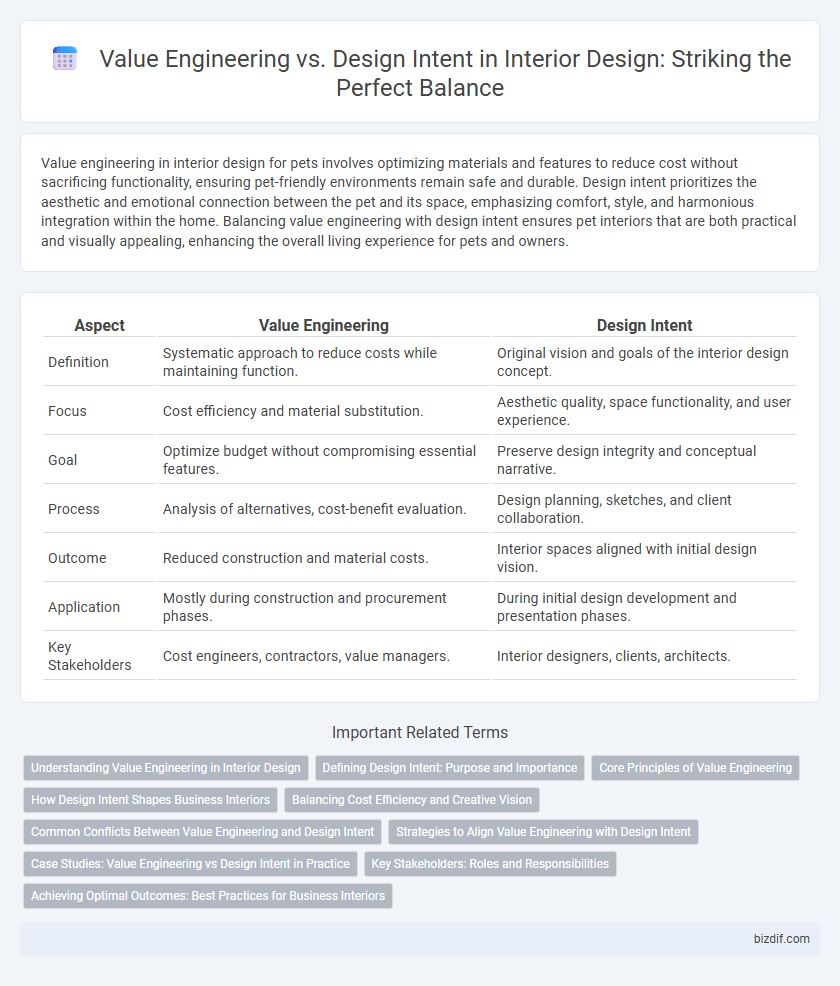
 Value engineering in interior design for pets involves optimizing materials and features to reduce cost without sacrificing functionality, ensuring pet-friendly environments remain safe and durable. Design intent prioritizes the aesthetic and emotional connection between the pet and its space, emphasizing comfort, style, and harmonious integration within the home. Balancing value engineering with design intent ensures pet interiors that are both practical and visually appealing, enhancing the overall living experience for pets and owners.
Table of Comparison
| Aspect | Value Engineering | Design Intent |
|---|---|---|
| Definition | Systematic approach to reduce costs while maintaining function. | Original vision and goals of the interior design concept. |
| Focus | Cost efficiency and material substitution. | Aesthetic quality, space functionality, and user experience. |
| Goal | Optimize budget without compromising essential features. | Preserve design integrity and conceptual narrative. |
| Process | Analysis of alternatives, cost-benefit evaluation. | Design planning, sketches, and client collaboration. |
| Outcome | Reduced construction and material costs. | Interior spaces aligned with initial design vision. |
| Application | Mostly during construction and procurement phases. | During initial design development and presentation phases. |
| Key Stakeholders | Cost engineers, contractors, value managers. | Interior designers, clients, architects. |
Understanding Value Engineering in Interior Design
Value engineering in interior design involves systematically evaluating materials, finishes, and construction methods to reduce costs while maintaining functionality and aesthetics. It requires balancing budget constraints with the original design intent to ensure key design elements and spatial experiences are preserved. Effective value engineering enhances project feasibility without compromising the vision, using cost-effective alternatives that align with client goals and quality standards.
Defining Design Intent: Purpose and Importance
Design intent in interior design defines the core purpose, aesthetic vision, and functional goals of a space, ensuring alignment with client needs and project objectives. It guides material selection, spatial arrangement, and overall ambiance to create a cohesive environment reflecting the intended style and usability. Maintaining a clear design intent is essential for preserving the project's integrity, even when value engineering adjustments are introduced.
Core Principles of Value Engineering
Value engineering in interior design emphasizes optimizing project costs without compromising functionality, quality, or aesthetics, aligning closely with the design intent. Core principles include analyzing materials, systems, and processes to identify cost-effective alternatives that uphold the original vision and performance standards. Prioritizing stakeholder collaboration and functional analysis ensures design integrity while maximizing value, balancing creativity with budget constraints.
How Design Intent Shapes Business Interiors
Design intent plays a crucial role in shaping business interiors by aligning spatial planning, material selection, and lighting with a company's brand identity and operational needs. Value engineering focuses on cost reduction and functionality without compromising essential design features, but it must respect the core vision to maintain aesthetic and experiential quality. Prioritizing design intent ensures that interior spaces enhance employee productivity, customer engagement, and overall corporate image.
Balancing Cost Efficiency and Creative Vision
Balancing cost efficiency and creative vision in interior design requires value engineering to optimize budgets while preserving design intent. Strategic selection of materials and finishes can reduce expenses without compromising aesthetic goals or functionality. Effective collaboration between designers and clients ensures innovative solutions align with financial constraints and artistic aspirations.
Common Conflicts Between Value Engineering and Design Intent
Value engineering often prioritizes cost reduction, which can conflict with design intent that emphasizes aesthetic quality and functional performance in interior design projects. Common conflicts arise when budget constraints lead to the substitution of materials or products that compromise spatial experience, lighting effects, or custom details envisioned by the designer. Balancing cost efficiency with maintaining the integrity of design intent requires careful evaluation of trade-offs to avoid diminishing overall project value and user satisfaction.
Strategies to Align Value Engineering with Design Intent
Value engineering in interior design prioritizes cost-efficiency while preserving key aesthetic and functional goals, often leveraging material substitutions and streamlined construction methods to maintain design integrity. Effective strategies to align value engineering with design intent include early collaboration between designers and engineers, thorough lifecycle cost analysis, and flexible design specifications that allow for cost-saving alternatives without compromising the core vision. Consistent communication and iterative prototyping ensure that value-engineering decisions support both budget constraints and the intended spatial experience.
Case Studies: Value Engineering vs Design Intent in Practice
Case studies in interior design reveal the delicate balance between value engineering and design intent, showcasing examples where cost reduction strategies impact material quality, spatial layout, and aesthetic integrity. These practical instances highlight how value engineering can lead to compromises in original design concepts, affecting functionality and client satisfaction. Effective collaboration and clear communication during project phases are essential to mitigate risks and achieve outcomes that respect both budget constraints and creative vision.
Key Stakeholders: Roles and Responsibilities
Key stakeholders in interior design balance value engineering with design intent by collaborating closely to maintain project quality and budget alignment. Interior designers ensure aesthetic and functional goals, while project managers oversee cost control and resource allocation. Clients and contractors engage in decision-making to align expectations, guaranteeing that design innovations remain feasible without compromising the initial vision.
Achieving Optimal Outcomes: Best Practices for Business Interiors
Value engineering in business interiors involves systematically evaluating design elements to reduce costs while maintaining functionality, contrasting with design intent, which prioritizes the original aesthetic and spatial vision. Integrating both approaches requires collaboration between designers and engineers to balance budget constraints with brand identity and user experience. Best practices include early-stage cost analysis, flexible material selection, and iterative feedback loops to achieve optimal outcomes without compromising design integrity.
value engineering vs design intent Infographic