 bizdif.com
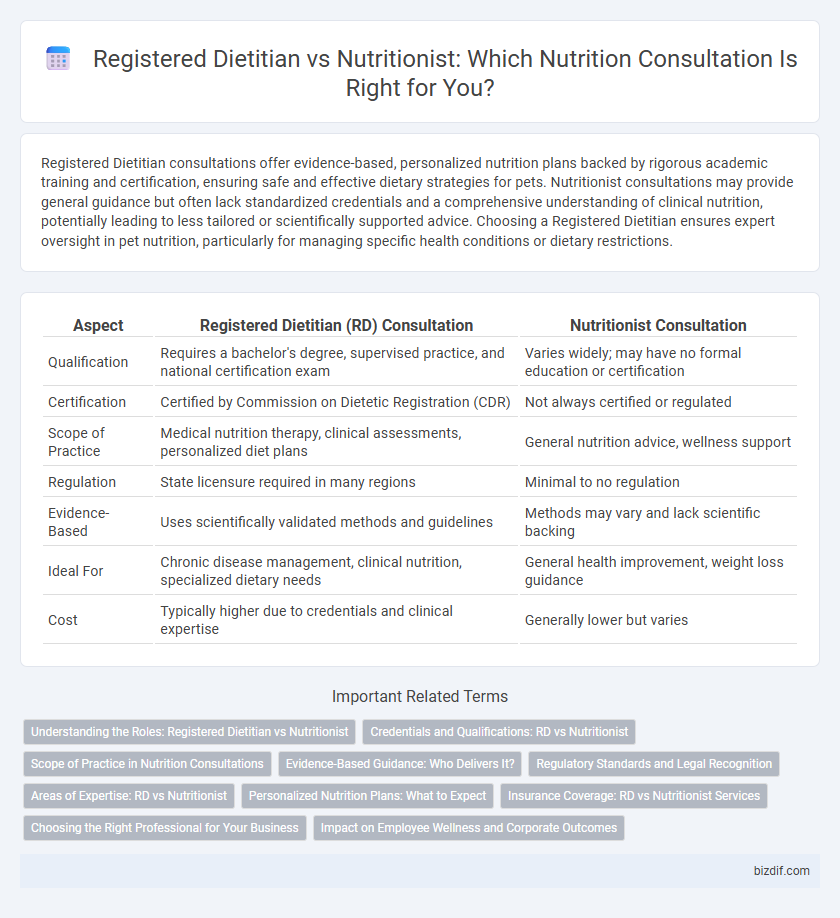
 Registered Dietitian consultations offer evidence-based, personalized nutrition plans backed by rigorous academic training and certification, ensuring safe and effective dietary strategies for pets. Nutritionist consultations may provide general guidance but often lack standardized credentials and a comprehensive understanding of clinical nutrition, potentially leading to less tailored or scientifically supported advice. Choosing a Registered Dietitian ensures expert oversight in pet nutrition, particularly for managing specific health conditions or dietary restrictions.
Table of Comparison
| Aspect | Registered Dietitian (RD) Consultation | Nutritionist Consultation |
|---|---|---|
| Qualification | Requires a bachelor's degree, supervised practice, and national certification exam | Varies widely; may have no formal education or certification |
| Certification | Certified by Commission on Dietetic Registration (CDR) | Not always certified or regulated |
| Scope of Practice | Medical nutrition therapy, clinical assessments, personalized diet plans | General nutrition advice, wellness support |
| Regulation | State licensure required in many regions | Minimal to no regulation |
| Evidence-Based | Uses scientifically validated methods and guidelines | Methods may vary and lack scientific backing |
| Ideal For | Chronic disease management, clinical nutrition, specialized dietary needs | General health improvement, weight loss guidance |
| Cost | Typically higher due to credentials and clinical expertise | Generally lower but varies |
Understanding the Roles: Registered Dietitian vs Nutritionist
Registered Dietitian (RD) consultations involve experts with accredited education, licensure, and clinical training, ensuring evidence-based dietary advice tailored to medical conditions. Nutritionists may have varied credentials with less regulatory oversight, often providing general nutrition guidance without clinical intervention. Understanding these distinctions helps individuals select appropriate, qualified professionals for personalized nutrition care.
Credentials and Qualifications: RD vs Nutritionist
Registered Dietitian (RD) consultations are led by professionals who have completed accredited dietetic programs, secured supervised practice hours, and passed a national registration exam, ensuring evidence-based nutritional guidance. Nutritionists may hold diverse qualifications varying from formal degrees to certificates, but the title "nutritionist" is often less regulated and can differ significantly in scope and expertise depending on jurisdiction. Choosing an RD guarantees consultation with a credentialed expert recognized by health authorities, while nutritionists might offer complementary insights but without standardized certification requirements.
Scope of Practice in Nutrition Consultations
Registered Dietitian (RD) consultations provide evidence-based nutritional guidance, diagnosis, and medical nutrition therapy for managing chronic diseases, ensuring a regulated scope of practice grounded in accredited education and supervised clinical training. Nutritionist consultations may vary widely in scope and credentialing, often focusing on general wellness and dietary advice without the legal authority to provide medical nutrition therapy or manage clinical conditions. Understanding the distinctions in scope of practice helps clients choose appropriate services for their specific health needs and ensures access to qualified professionals for therapeutic nutrition interventions.
Evidence-Based Guidance: Who Delivers It?
Registered Dietitian (RD) consultations provide evidence-based guidance grounded in rigorous academic training, clinical practice, and accreditation by recognized professional bodies such as the Commission on Dietetic Registration. Nutritionists may have variable qualifications, and unless they hold specific certifications like Certified Nutrition Specialist (CNS), their recommendations might lack standardized evidence-based validation. Clients seeking scientifically backed nutritional advice should prioritize Registered Dietitians for accurate assessment, personalized meal planning, and clinically supported interventions.
Regulatory Standards and Legal Recognition
Registered Dietitian consultations are governed by strict regulatory standards, requiring accredited education, supervised practice, and licensure, ensuring legally recognized qualifications and adherence to evidence-based guidelines. Nutritionist consultations often lack uniform regulation and legal recognition, varying significantly by region and sometimes permitting practice without standardized credentials. This distinction impacts the reliability, accountability, and scope of practice, making registered dietitians the preferred choice for medically tailored nutrition advice.
Areas of Expertise: RD vs Nutritionist
Registered Dietitians (RDs) hold accredited degrees and certifications in clinical nutrition, medical nutrition therapy, and diet planning for chronic diseases, making them experts in evidence-based dietary interventions. Nutritionists may have varied educational backgrounds with less standardized training, often focusing on general wellness, dietary advice, and lifestyle enhancement without extensive clinical expertise. RDs are qualified to design medical nutrition therapy for conditions such as diabetes, cardiovascular disease, and gastrointestinal disorders, while nutritionists typically address broader nutritional guidance and preventive care.
Personalized Nutrition Plans: What to Expect
Registered Dietitian (RD) consultations provide personalized nutrition plans based on clinical assessments, medical history, and evidence-based guidelines tailored to specific health conditions. Nutritionist consultations may offer general dietary advice but often lack the credentialed expertise to develop precise, medically-informed nutrition strategies. Expect an RD consultation to include detailed meal planning, nutrient analysis, and ongoing monitoring to optimize health outcomes.
Insurance Coverage: RD vs Nutritionist Services
Registered Dietitian (RD) consultations are more likely to be covered by insurance plans since RDs meet rigorous credentialing and regulatory standards recognized by healthcare providers. Nutritionist consultations often lack consistent insurance coverage due to varying certification requirements and less standardized qualifications across states. Insurance companies prioritize reimbursing services provided by RDs because their expertise aligns with medical nutrition therapy protocols essential for managing chronic conditions.
Choosing the Right Professional for Your Business
Registered Dietitian (RD) consultations provide evidence-based nutrition guidance backed by accredited education and clinical training, ensuring compliance with industry standards and regulatory requirements. Nutritionists may offer valuable insights but lack uniform certification, which can affect professional credibility and the quality of advice in business settings. Selecting an RD enhances the reliability of dietary plans, supports tailored client strategies, and boosts your business reputation through scientifically validated expertise.
Impact on Employee Wellness and Corporate Outcomes
Registered Dietitian consultations provide evidence-based nutritional guidance that directly improves employee health metrics, reducing absenteeism and enhancing productivity. Nutritionists, while offering general dietary advice, may lack the clinical training of Registered Dietitians, potentially limiting the effectiveness of wellness programs. Integrating Registered Dietitian services into corporate wellness initiatives leads to measurable improvements in workforce vitality and healthcare cost savings.
Registered Dietitian Consultation vs Nutritionist Consultation Infographic