 bizdif.com
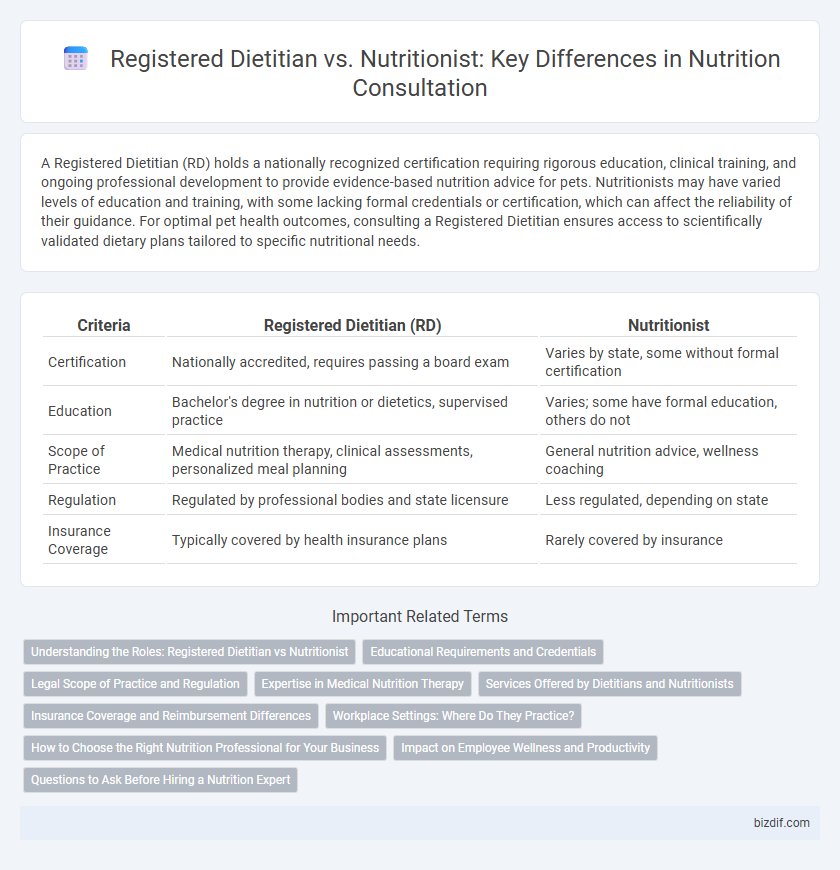
 A Registered Dietitian (RD) holds a nationally recognized certification requiring rigorous education, clinical training, and ongoing professional development to provide evidence-based nutrition advice for pets. Nutritionists may have varied levels of education and training, with some lacking formal credentials or certification, which can affect the reliability of their guidance. For optimal pet health outcomes, consulting a Registered Dietitian ensures access to scientifically validated dietary plans tailored to specific nutritional needs.
Table of Comparison
| Criteria | Registered Dietitian (RD) | Nutritionist |
|---|---|---|
| Certification | Nationally accredited, requires passing a board exam | Varies by state, some without formal certification |
| Education | Bachelor's degree in nutrition or dietetics, supervised practice | Varies; some have formal education, others do not |
| Scope of Practice | Medical nutrition therapy, clinical assessments, personalized meal planning | General nutrition advice, wellness coaching |
| Regulation | Regulated by professional bodies and state licensure | Less regulated, depending on state |
| Insurance Coverage | Typically covered by health insurance plans | Rarely covered by insurance |
Understanding the Roles: Registered Dietitian vs Nutritionist
Registered Dietitians (RDs) are credentialed healthcare professionals who have completed accredited dietetics programs, passed a national examination, and maintain licensure through continuing education, ensuring evidence-based nutrition guidance. Nutritionists hold varied qualifications and certifications, with some states requiring licensure while others do not, leading to inconsistent standards in practice and expertise. Understanding the distinction between RDs and nutritionists helps consumers select qualified experts for personalized, safe, and effective nutrition consultation.
Educational Requirements and Credentials
Registered Dietitians (RDs) must complete a bachelor's degree in dietetics or nutrition, fulfill accredited supervised practice programs, and pass a national registration exam, ensuring standardized expertise in clinical nutrition and diet therapy. Nutritionists often have varied educational backgrounds, ranging from formal degrees in nutrition to certifications without standardized accreditation, leading to inconsistent qualifications across practitioners. Credentials like the Commission on Dietetic Registration (CDR) credential guarantee RDs' compliance with rigorous educational and professional standards, distinguishing them from many nutritionists who may lack such verified credentials.
Legal Scope of Practice and Regulation
Registered Dietitians (RDs) are regulated healthcare professionals with a defined legal scope of practice, including the ability to diagnose and treat nutrition-related conditions. Nutritionists may lack standardized certification and legal recognition, resulting in varied scopes of practice depending on local regulations. Understanding the regulatory differences ensures clients receive evidence-based nutrition care tailored to their medical needs.
Expertise in Medical Nutrition Therapy
Registered Dietitians (RDs) possess extensive training and certification in Medical Nutrition Therapy (MNT), enabling them to develop evidence-based diet plans for managing chronic diseases such as diabetes, cardiovascular conditions, and kidney disorders. Nutritionists may have varying levels of education and lack standardized credentials, which impacts their proficiency in delivering specialized MNT interventions. Clinical settings prioritize RDs due to their rigorous education, clinical experience, and adherence to regulatory standards essential for effective medical nutrition care.
Services Offered by Dietitians and Nutritionists
Registered Dietitians provide personalized medical nutrition therapy, clinical assessments, and evidence-based meal planning to manage chronic diseases such as diabetes and cardiovascular conditions. Nutritionists often offer general dietary advice, wellness coaching, and weight management plans but may lack certification to address complex medical nutrition needs. Dietitians' services include nutritional counseling, food allergy management, and collaboration with healthcare teams, ensuring comprehensive and scientifically validated care.
Insurance Coverage and Reimbursement Differences
Registered Dietitians (RDs) often receive broader insurance coverage and reimbursement due to their accredited credentials and evidence-based training, making services more affordable for clients. Nutritionists, depending on state regulations and certifications, may not be eligible for insurance reimbursement, limiting access to insured support for nutrition counseling. Understanding these insurance coverage disparities is crucial for selecting a qualified nutrition professional aligned with financial and healthcare needs.
Workplace Settings: Where Do They Practice?
Registered dietitians typically work in clinical environments such as hospitals, outpatient clinics, and long-term care facilities, providing medical nutrition therapy and specialized dietary plans. Nutritionists often practice in community health centers, wellness programs, schools, and private consulting, focusing on general nutrition education and healthy lifestyle guidance. Both professionals may also be found in corporate wellness programs and research institutions, but only registered dietitians have the credential required for medical nutrition interventions in regulated settings.
How to Choose the Right Nutrition Professional for Your Business
Selecting the right nutrition professional for your business hinges on understanding the credential differences between a Registered Dietitian (RD) and a Nutritionist. Registered Dietitians hold accredited certifications from recognized regulatory bodies, ensuring expertise in clinical nutrition, medical nutrition therapy, and evidence-based dietary planning. Nutritionists may have varied qualifications and less standardized training, so prioritizing credentials, experience, and specialization aligned with your business goals is essential for effective nutrition consultation.
Impact on Employee Wellness and Productivity
Registered Dietitians offer evidence-based nutrition guidance that directly improves employee wellness by reducing risks of chronic diseases and boosting energy levels. Nutritionists may provide general dietary advice but often lack the clinical training required to design personalized nutrition plans that enhance workplace productivity. Utilizing a Registered Dietitian for employee wellness programs can lead to measurable improvements in absenteeism, focus, and overall job performance.
Questions to Ask Before Hiring a Nutrition Expert
When choosing between a Registered Dietitian and a Nutritionist, ask about their professional credentials, such as RD certification or relevant state licensure, to ensure expertise and regulatory compliance. Inquire about their experience with your specific health conditions or dietary needs, as specialized knowledge can significantly impact the quality of care. Clarify their approach to nutrition plans, including evidence-based practices and personalized strategies to promote sustainable and effective health outcomes.
Registered Dietitian vs Nutritionist Infographic