 bizdif.com
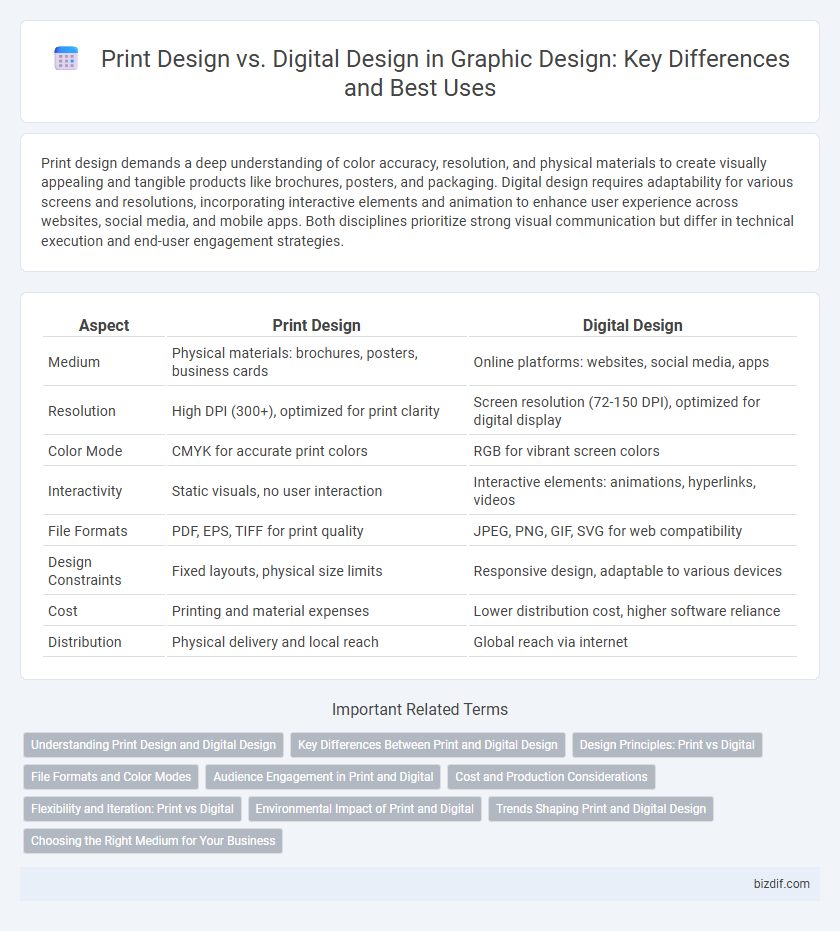
 Print design demands a deep understanding of color accuracy, resolution, and physical materials to create visually appealing and tangible products like brochures, posters, and packaging. Digital design requires adaptability for various screens and resolutions, incorporating interactive elements and animation to enhance user experience across websites, social media, and mobile apps. Both disciplines prioritize strong visual communication but differ in technical execution and end-user engagement strategies.
Table of Comparison
| Aspect | Print Design | Digital Design |
|---|---|---|
| Medium | Physical materials: brochures, posters, business cards | Online platforms: websites, social media, apps |
| Resolution | High DPI (300+), optimized for print clarity | Screen resolution (72-150 DPI), optimized for digital display |
| Color Mode | CMYK for accurate print colors | RGB for vibrant screen colors |
| Interactivity | Static visuals, no user interaction | Interactive elements: animations, hyperlinks, videos |
| File Formats | PDF, EPS, TIFF for print quality | JPEG, PNG, GIF, SVG for web compatibility |
| Design Constraints | Fixed layouts, physical size limits | Responsive design, adaptable to various devices |
| Cost | Printing and material expenses | Lower distribution cost, higher software reliance |
| Distribution | Physical delivery and local reach | Global reach via internet |
Understanding Print Design and Digital Design
Print design involves creating visual content intended for physical media such as brochures, posters, and packaging, emphasizing high resolution and color accuracy with CMYK printing standards. Digital design focuses on interactive and screen-based media like websites, social media, and mobile apps, prioritizing RGB color models, responsive layouts, and user experience (UX) principles. Understanding the technical requirements and limitations of each medium is essential for effective graphic communication and ensuring design consistency across platforms.
Key Differences Between Print and Digital Design
Print design requires high-resolution images and CMYK color models to ensure sharpness and accurate color reproduction on physical materials, while digital design uses RGB color models optimized for screen display and varying resolutions. Print design demands precise measurements and bleed areas for trimming, whereas digital design allows for flexible layouts that adapt to different screen sizes and interactive elements such as animation or hyperlinks. File formats also differ significantly, with print favoring PDF, TIFF, or EPS files for quality preservation, and digital design relying on JPEG, PNG, GIF, or SVG for web compatibility and fast loading times.
Design Principles: Print vs Digital
Print design relies heavily on principles like resolution, color accuracy (CMYK), and physical layout considerations to ensure clarity and impact in tangible formats. Digital design emphasizes responsive layouts, RGB color models, and user interaction, optimizing visuals for screens and diverse devices. Both disciplines demand mastery of typography, contrast, and hierarchy but adapt these elements to medium-specific constraints and opportunities.
File Formats and Color Modes
Print design primarily uses CMYK color mode to ensure accurate color reproduction on physical materials, with file formats like PDF, EPS, and TIFF preferred for high-resolution output. Digital design relies on RGB color mode optimized for screens, utilizing file formats such as JPEG, PNG, GIF, and SVG to support web compatibility and faster loading times. Understanding the differences in color modes and file formats is crucial for designers to create visually consistent and technically appropriate graphics for their intended medium.
Audience Engagement in Print and Digital
Print design captures audience engagement through tactile experiences and tangible visuals, fostering a deeper emotional connection and prolonged attention. Digital design leverages interactive elements, animations, and real-time feedback to engage users instantly and dynamically across multiple platforms. Understanding audience preferences and context is crucial for optimizing engagement in both print and digital formats.
Cost and Production Considerations
Print design often involves higher upfront costs due to expenses like materials, printing, and shipping, while digital design benefits from lower production costs and instant distribution. Print projects require careful consideration of color accuracy, resolution, and physical formats, which can increase both time and financial investment compared to digital design. Digital design allows for easier revisions and scalability, reducing ongoing expenses associated with updates and modifications.
Flexibility and Iteration: Print vs Digital
Print design offers limited flexibility due to fixed physical formats and higher costs for revisions, making iteration slower and more resource-intensive. Digital design enables rapid iteration and easy updates through editable files, allowing designers to experiment with multiple variations in real time. This flexibility in digital design supports dynamic content adjustments, improving responsiveness to audience feedback and market trends.
Environmental Impact of Print and Digital
Print design generates significant environmental impact through paper consumption, ink usage, and waste production, contributing to deforestation, water pollution, and carbon emissions. Digital design reduces physical resource use and waste but promotes electronic device manufacturing and energy consumption, which also have notable ecological footprints. Sustainable practices in both print and digital design, such as eco-friendly materials and energy-efficient technologies, are essential for minimizing environmental harm.
Trends Shaping Print and Digital Design
Print design trends emphasize tactile experiences and sustainability, incorporating textured papers, eco-friendly inks, and minimalist layouts to engage audiences physically. Digital design trends prioritize interactivity and responsiveness, utilizing motion graphics, bold typography, and immersive user interfaces to enhance visual storytelling across devices. Both disciplines increasingly integrate augmented reality and personalized content to bridge offline and online engagement, reflecting evolving consumer preferences.
Choosing the Right Medium for Your Business
Print design offers tangible marketing materials such as brochures, business cards, and posters that provide lasting physical presence and credibility for your brand. Digital design leverages dynamic elements, quick updates, and broad reach through websites, social media, and email campaigns, enhancing engagement and real-time interaction. Selecting the right medium depends on your target audience preferences, campaign goals, and budget, ensuring maximum impact and return on investment for your business.
Print design vs Digital design Infographic