 bizdif.com
 Integrating brand identity into interior design for pet spaces creates a cohesive and memorable environment that reflects the company's values and personality, enhancing customer connection and loyalty. Neutral design, while versatile and timeless, may lack the distinctive character needed to differentiate a pet brand in a competitive market. Balancing brand-specific elements with neutral tones can optimize both aesthetic appeal and functional adaptability.
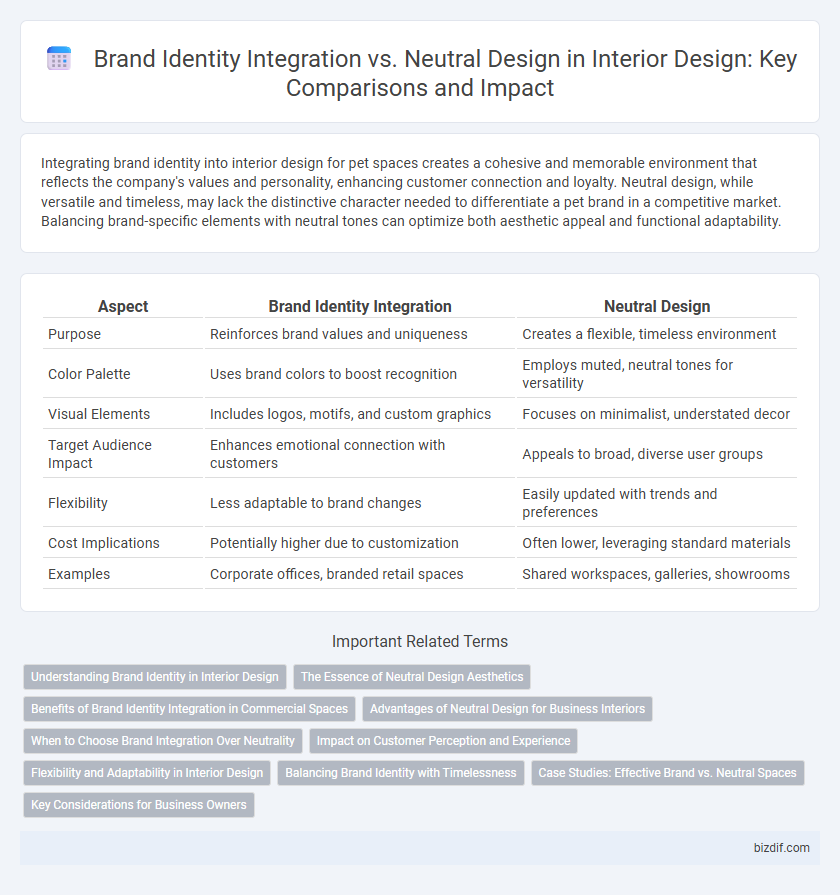
Table of Comparison
| Aspect | Brand Identity Integration | Neutral Design |
|---|---|---|
| Purpose | Reinforces brand values and uniqueness | Creates a flexible, timeless environment |
| Color Palette | Uses brand colors to boost recognition | Employs muted, neutral tones for versatility |
| Visual Elements | Includes logos, motifs, and custom graphics | Focuses on minimalist, understated decor |
| Target Audience Impact | Enhances emotional connection with customers | Appeals to broad, diverse user groups |
| Flexibility | Less adaptable to brand changes | Easily updated with trends and preferences |
| Cost Implications | Potentially higher due to customization | Often lower, leveraging standard materials |
| Examples | Corporate offices, branded retail spaces | Shared workspaces, galleries, showrooms |
Understanding Brand Identity in Interior Design
Understanding brand identity in interior design involves integrating visual elements, color palettes, and spatial organization that reflect a company's core values and personality, creating a cohesive brand experience. Brand identity integration enhances customer recognition and emotional connection by embedding unique design features that communicate the brand's story and mission. Neutral design, in contrast, prioritizes versatility and timelessness, often serving as a blank canvas that can accommodate diverse user preferences without strong brand association.
The Essence of Neutral Design Aesthetics
Neutral design aesthetics emphasize simplicity through a muted color palette, clean lines, and minimalistic elements that create calm and versatility in interior spaces. This approach allows the subtle texture and natural materials to stand out, fostering a timeless and adaptable environment that doesn't compete with branded elements. Unlike brand identity integration, which prioritizes distinctive logos and color schemes, neutral design centers on creating a serene backdrop that complements various styles and personal expressions.
Benefits of Brand Identity Integration in Commercial Spaces
Brand identity integration in commercial interior design enhances customer recognition and loyalty by embedding logos, color schemes, and brand stories directly into the physical environment. This approach creates a cohesive, immersive experience that strengthens emotional connections and distinguishes the space from competitors. By reflecting the brand's values and personality through design elements, businesses can effectively communicate their unique identity and foster a memorable client interaction.
Advantages of Neutral Design for Business Interiors
Neutral design in business interiors enhances versatility by providing a timeless backdrop that effortlessly adapts to evolving brand identities and diverse client preferences. This approach reduces the need for frequent costly renovations, promoting sustainability and long-term cost efficiency. A neutral palette creates a calm, professional atmosphere that fosters employee productivity and appeals broadly to clients, supporting a wide range of business functions and marketing strategies.
When to Choose Brand Integration Over Neutrality
Brand identity integration should be prioritized when the interior design aims to reinforce company values, enhance customer recognition, and create a cohesive brand experience through visual elements like logos, color schemes, and textures. Neutral design is preferable for multifunctional spaces or environments requiring flexibility and broad appeal, avoiding strong brand signals that could limit adaptability. Opt for brand integration in retail stores, corporate offices, and hospitality spaces where emotional connection and brand loyalty are critical to business success.
Impact on Customer Perception and Experience
Brand identity integration in interior design enhances customer perception by creating a cohesive and memorable environment that reinforces brand values and emotions, leading to increased loyalty and recognition. Neutral design offers flexibility and broad appeal but may lack the distinctiveness that fosters strong emotional connections and brand recall. The choice between these approaches impacts the overall customer experience, influencing engagement, satisfaction, and the lasting impression of the space.
Flexibility and Adaptability in Interior Design
Brand identity integration in interior design creates spaces that reflect specific values, colors, and aesthetics, enhancing brand recognition but often limiting flexibility for future updates or different uses. Neutral design prioritizes adaptability, using versatile color palettes and minimalist elements that accommodate evolving functions and branding shifts without extensive renovations. Balancing brand identity with neutral elements maximizes both customization and long-term usability, ensuring interiors remain relevant and functional across different scenarios.
Balancing Brand Identity with Timelessness
Balancing brand identity with timelessness in interior design involves integrating distinctive brand elements without overwhelming the space, ensuring longevity and appeal. Subtle incorporation of logos, color schemes, and thematic motifs creates a cohesive environment that reinforces brand values while maintaining a neutral base for adaptability. This approach maximizes aesthetic harmony and functional flexibility, essential for enduring relevance in dynamic commercial interiors.
Case Studies: Effective Brand vs. Neutral Spaces
Case studies reveal that effective brand identity integration in interior design enhances customer engagement by creating memorable and cohesive environments, leveraging signature colors, logos, and thematic elements. In contrast, neutral design spaces prioritize flexibility and universal appeal, often benefiting multi-purpose or transient settings but risking diminished emotional connection. Successful projects balance distinctive brand cues with subtle neutrality to foster both brand recognition and functional versatility.
Key Considerations for Business Owners
In interior design, brand identity integration involves tailoring space elements like color schemes, logos, and materials to reinforce a company's image and values, enhancing customer recognition and employee alignment. Neutral design prioritizes versatility and broad appeal by using minimalist aesthetics and muted palettes, allowing businesses to adapt spaces easily for different purposes or audiences. Business owners must evaluate factors such as target market consistency, long-term brand strategy, and flexibility needs when choosing between distinct brand-driven interiors or timeless neutral environments.
Brand identity integration vs Neutral design Infographic