 bizdif.com
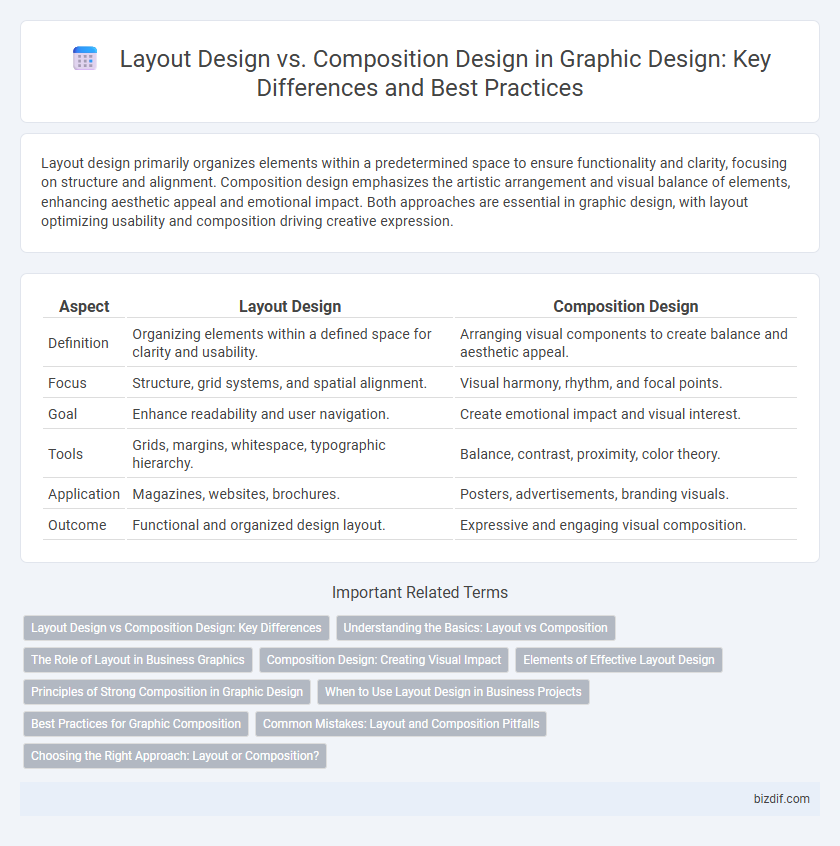
 Layout design primarily organizes elements within a predetermined space to ensure functionality and clarity, focusing on structure and alignment. Composition design emphasizes the artistic arrangement and visual balance of elements, enhancing aesthetic appeal and emotional impact. Both approaches are essential in graphic design, with layout optimizing usability and composition driving creative expression.
Table of Comparison
| Aspect | Layout Design | Composition Design |
|---|---|---|
| Definition | Organizing elements within a defined space for clarity and usability. | Arranging visual components to create balance and aesthetic appeal. |
| Focus | Structure, grid systems, and spatial alignment. | Visual harmony, rhythm, and focal points. |
| Goal | Enhance readability and user navigation. | Create emotional impact and visual interest. |
| Tools | Grids, margins, whitespace, typographic hierarchy. | Balance, contrast, proximity, color theory. |
| Application | Magazines, websites, brochures. | Posters, advertisements, branding visuals. |
| Outcome | Functional and organized design layout. | Expressive and engaging visual composition. |
Layout Design vs Composition Design: Key Differences
Layout design focuses on organizing visual elements within a defined space to enhance readability and user experience, typically used in print media, websites, and advertisements. Composition design emphasizes the artistic arrangement and balance of elements to create a visually appealing and harmonious piece, often applied in fine art and photography. Key differences lie in layout design's functional approach to structure and usability, whereas composition design prioritizes aesthetic flow and emotional impact.
Understanding the Basics: Layout vs Composition
Layout design focuses on the structured arrangement of visual elements like text and images to create clear, functional designs, ensuring user-friendly navigation and hierarchy. Composition design emphasizes the artistic organization of these elements for aesthetic balance, rhythm, and visual interest, prioritizing emotional impact and brand storytelling. Understanding the basics of layout versus composition is essential for graphic designers to blend usability with creativity effectively.
The Role of Layout in Business Graphics
Layout design in business graphics structures visual elements to enhance communication and user engagement, prioritizing readability and brand consistency across marketing materials. Composition design focuses on the artistic arrangement of elements for aesthetic balance and visual interest, but the layout drives functionality in advertisements, brochures, and websites. Effective layout design ensures clear message delivery, guiding the viewer's eye to key information and calls to action, which directly impacts conversion rates and brand perception.
Composition Design: Creating Visual Impact
Composition design focuses on arranging visual elements to create a powerful impact by balancing harmony, contrast, and hierarchy. Effective composition guides viewers' attention through strategic placement of shapes, colors, and typography, enhancing overall message clarity. Prioritizing spatial relationships and visual rhythm ensures a dynamic and engaging design that resonates emotionally.
Elements of Effective Layout Design
Effective layout design in graphic design emphasizes grid systems, alignment, and spacing to create visual hierarchy and guide the viewer's eye. Composition design balances elements like typography, imagery, and color to convey a coherent message and evoke the intended emotional response. Mastering layout elements such as contrast, repetition, and proximity ensures clarity and enhances user engagement in both print and digital media.
Principles of Strong Composition in Graphic Design
Layout design emphasizes organizing text and visuals within a defined space to enhance readability and user experience, while composition design focuses on the harmonious arrangement of elements to convey a clear message. Key principles of strong composition in graphic design include balance, contrast, alignment, proximity, and hierarchy, which guide the viewer's eye and create visual interest. Effective use of these principles ensures that the design communicates purpose and meaning efficiently and aesthetically.
When to Use Layout Design in Business Projects
Layout design is essential in business projects when organizing text, images, and branding elements for clear communication and visual hierarchy, particularly in marketing materials, reports, and presentations. It ensures alignment, spacing, and consistency to enhance readability and user engagement. Employ layout design to create professional, structured formats that support brand identity and facilitate effective information delivery.
Best Practices for Graphic Composition
Effective graphic composition balances visual elements to guide viewer focus, using principles such as alignment, contrast, hierarchy, and balance. Best practices include creating a clear focal point, maintaining consistent spacing, and employing grids to organize content for readability and visual appeal. Prioritizing simplicity and intentionality in layout design enhances communication and user engagement.
Common Mistakes: Layout and Composition Pitfalls
Common mistakes in layout design include overcrowding elements and neglecting alignment, which disrupt visual hierarchy and readability. In composition design, failing to balance negative space and improperly grouping related elements can confuse the viewer and weaken the message. Both pitfalls undermine effective communication by diminishing clarity and aesthetic appeal.
Choosing the Right Approach: Layout or Composition?
Choosing the right approach between layout design and composition design depends on the project's goals and visual priorities. Layout design emphasizes arranging text and images into structured grids for clarity and usability, essential in web design and print media. Composition design focuses on the artistic placement of elements to create balance and visual interest, making it ideal for branding and advertising campaigns.
Layout design vs composition design Infographic