 bizdif.com
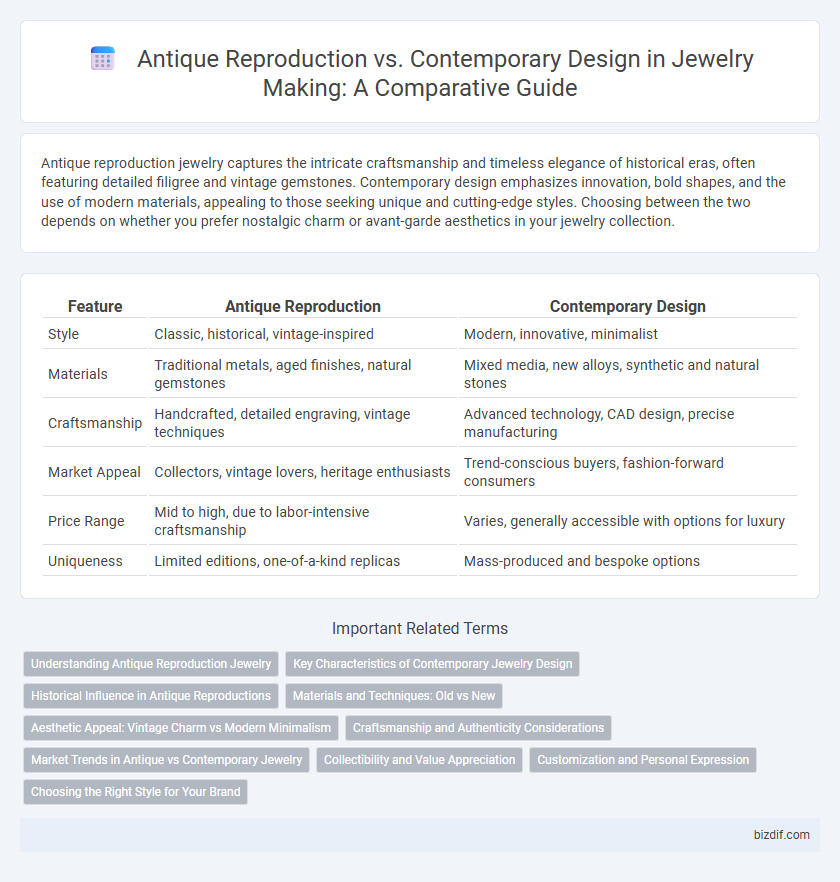
 Antique reproduction jewelry captures the intricate craftsmanship and timeless elegance of historical eras, often featuring detailed filigree and vintage gemstones. Contemporary design emphasizes innovation, bold shapes, and the use of modern materials, appealing to those seeking unique and cutting-edge styles. Choosing between the two depends on whether you prefer nostalgic charm or avant-garde aesthetics in your jewelry collection.
Table of Comparison
| Feature | Antique Reproduction | Contemporary Design |
|---|---|---|
| Style | Classic, historical, vintage-inspired | Modern, innovative, minimalist |
| Materials | Traditional metals, aged finishes, natural gemstones | Mixed media, new alloys, synthetic and natural stones |
| Craftsmanship | Handcrafted, detailed engraving, vintage techniques | Advanced technology, CAD design, precise manufacturing |
| Market Appeal | Collectors, vintage lovers, heritage enthusiasts | Trend-conscious buyers, fashion-forward consumers |
| Price Range | Mid to high, due to labor-intensive craftsmanship | Varies, generally accessible with options for luxury |
| Uniqueness | Limited editions, one-of-a-kind replicas | Mass-produced and bespoke options |
Understanding Antique Reproduction Jewelry
Antique reproduction jewelry accurately replicates designs from specific historical periods, such as Victorian or Art Deco, using traditional techniques and materials to preserve authenticity. This type of jewelry highlights intricate craftsmanship, often featuring hand-engraving, filigree work, and vintage gemstones to match the original aesthetic. Understanding these pieces involves recognizing their historical context, meticulous construction, and the value placed on preserving antique styles rather than adopting modern trends.
Key Characteristics of Contemporary Jewelry Design
Contemporary jewelry design emphasizes sleek lines, innovative materials, and a minimalist aesthetic, often incorporating mixed metals, resin, and sustainable elements. It prioritizes personal expression and versatility, featuring asymmetrical shapes and bold geometric forms that contrast with the detailed ornamentation of antique reproductions. Modern techniques such as 3D printing and computer-aided design (CAD) enable precision and customization, setting contemporary pieces apart in both craftsmanship and style.
Historical Influence in Antique Reproductions
Antique reproductions in jewelry making heavily draw from historical influence, incorporating design elements and techniques from specific time periods such as Georgian, Victorian, or Art Deco eras. These reproductions emphasize authenticity through detailed craftsmanship, including hand engraving and the use of period-appropriate gemstones to replicate the aesthetic and cultural significance of original pieces. Contrastingly, contemporary designs prioritize innovation and personal expression, often blending modern materials and abstract forms that reflect current trends rather than historical accuracy.
Materials and Techniques: Old vs New
Antique reproduction jewelry often utilizes traditional materials such as high-karat gold, natural gemstones, and hand-forged settings, preserving historical techniques like filigree and granulation to achieve authentic textures. In contrast, contemporary design incorporates advanced materials including titanium, resin, and lab-grown diamonds, alongside modern methods like 3D printing and CAD modeling that allow for precision and innovative forms. The choice between old and new materials and techniques significantly impacts durability, aesthetic, and production time, reflecting distinct creative philosophies in jewelry making.
Aesthetic Appeal: Vintage Charm vs Modern Minimalism
Antique reproduction jewelry captures vintage charm through intricate details, ornate patterns, and rich historical influences, appealing to those who appreciate timeless elegance and sentimental value. Contemporary designs emphasize modern minimalism with clean lines, geometric shapes, and sleek finishes, attracting individuals drawn to simplicity and understated sophistication. Both styles offer distinct aesthetic appeals that cater to diverse tastes within the jewelry-making art.
Craftsmanship and Authenticity Considerations
Antique reproduction jewelry demands meticulous craftsmanship to replicate historical techniques, materials, and design intricacies authentically, preserving the original aesthetic and cultural significance. Contemporary design emphasizes innovative methods and modern aesthetics, allowing for customization and new artistic expressions while often utilizing advanced tools like CAD and 3D printing. Authenticity considerations in antique reproduction revolve around faithful adherence to period-specific details, whereas contemporary pieces highlight originality and designer intent, catering to evolving consumer tastes.
Market Trends in Antique vs Contemporary Jewelry
Antique reproduction jewelry maintains strong appeal among collectors and nostalgic buyers, driven by its intricate craftsmanship and timeless aesthetic. Contemporary jewelry designs dominate the market through innovative materials, bold styles, and customization options that attract younger consumers. Emerging trends reveal a growing fusion of vintage-inspired elements with modern techniques, blending heritage with current fashion sensibilities.
Collectibility and Value Appreciation
Antique reproduction jewelry captures the intricate craftsmanship and historical appeal of original pieces, often enhancing collectibility by appealing to vintage enthusiasts and connoisseurs. Contemporary design jewelry prioritizes innovative aesthetics and modern techniques, attracting collectors interested in unique, forward-looking creations with potential for niche market value appreciation. While antique reproductions generally maintain steady value due to their classic allure, contemporary designs may experience significant appreciation, driven by brand reputation and artistic innovation.
Customization and Personal Expression
Antique reproduction jewelry captures timeless elegance with intricate craftsmanship, offering rich historical significance that appeals to collectors and enthusiasts seeking authentic vintage aesthetics. Contemporary design emphasizes innovation and personalization, allowing jewelers to customize pieces with modern materials, unique styles, and personal engravings that reflect individual identity. Customization in contemporary designs fosters deeper personal expression, whereas antique reproductions provide a connection to heritage and tradition through carefully replicated details.
Choosing the Right Style for Your Brand
Antique reproduction jewelry captures historical elegance through intricate craftsmanship and vintage-inspired motifs, appealing to customers seeking timeless sophistication. Contemporary design emphasizes modern aesthetics and innovative techniques, resonating with a trend-conscious audience interested in unique, cutting-edge pieces. Selecting the right style for your brand depends on understanding your target market's preferences and aligning your collection with either classic heritage or forward-looking creativity.
Antique Reproduction vs Contemporary Design Infographic